CEEP Notes from Jointly Trained Doctoral Students Overseas [Second Week of October]
Doctoral student Yang Bo attended the IIASA internal seminar on AI for Climate Science this week. The speaker presented the study AI Emulators for Weather and Climate: Promise, Pitfalls, and Paths Forward. The report centered on the physical fidelity of AI-based weather and climate emulators, pointing out that while AI weather models can rival physical systems in forecast skill, and climate emulators can generate long-term simulations at low cost, biases remain in their reproduction of the butterfly effect and in the frequency of extreme events. The report went on to introduce improvement pathways such as AI+RES rare-event sampling and a fully generative ERA5 climate emulator. In addition, on October 14–15 Yang discussed result analysis for the ALPS project with members of the ECE group and confirmed the next direction for technical optimization of the agent model. She also held meetings with group members on the modeling approach, scenario design, and data requirements for climate adaptation scenarios within the MESSAGEix-buildings model, providing support for the subsequent quantitative analysis of adaptation scenarios in integrated assessment models (IAMs).
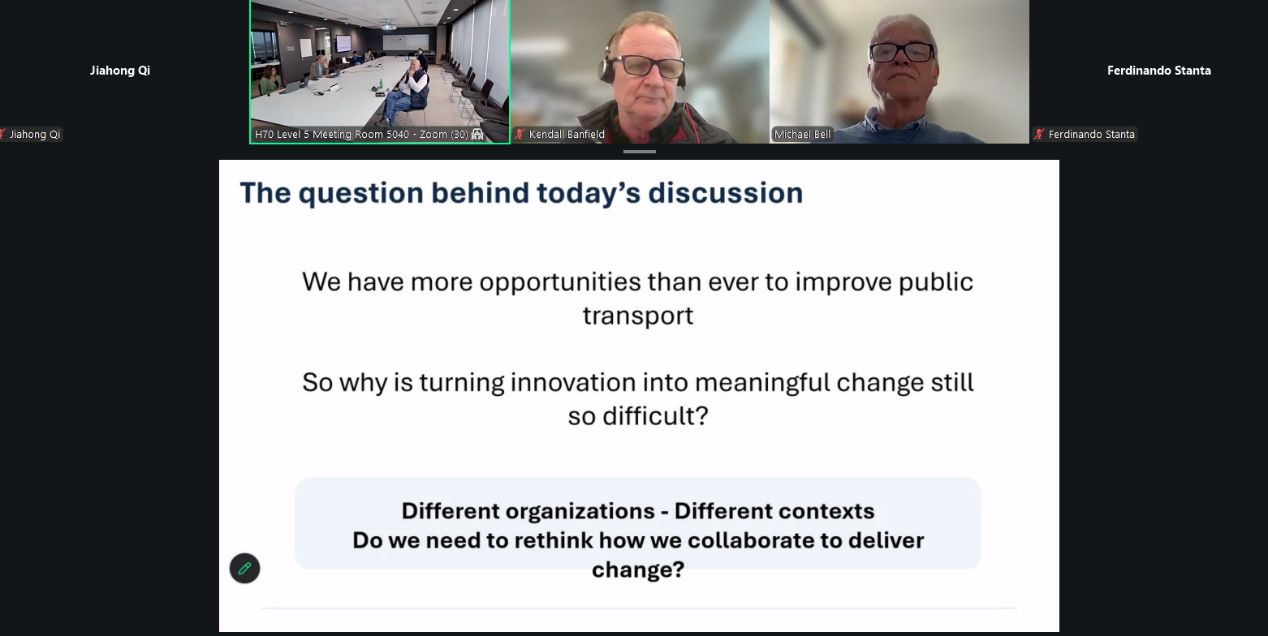
On October 14, doctoral student Qi Jiahong attended an academic seminar hosted by the Institute of Transport and Logistics Studies (ITLS) at the University of Sydney, where she learned about the keynote report entitled “Leading Change in Transport: Why Context Matters.” The report addressed organizational change in the transport sector amid low-carbon transition, the application of new technologies, shifting travel demand, and cost pressures, drawing on practical cases such as autonomous driving, zero-emission transport, and mobility-on-demand. Through this session, she deepened her understanding of innovation management and organizational change in the transport sector.
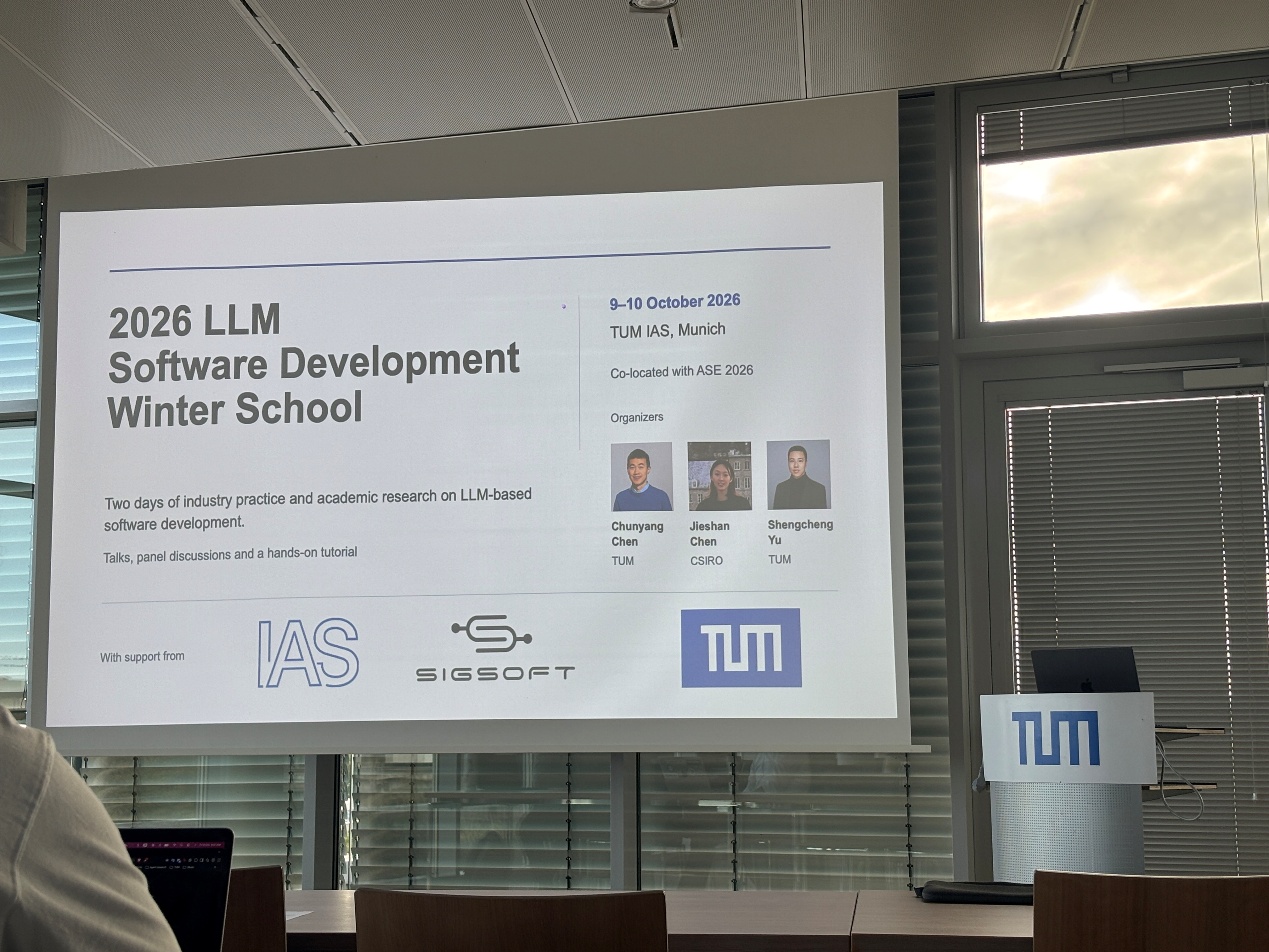
From October 9 to 10, 2026, doctoral student Yu Ke attended the “LLM Software Development Winter School 2026” academic training program held at the Technical University of Munich (TUM) in Germany. The program focused on the deep integration of large language models (LLMs) and software engineering, bringing together experts and scholars from Google, Amazon, Siemens, and universities and research institutions in Germany and abroad. Through keynote talks, hands-on technical sessions, and academic discussions, the program systematically presented frontier research and industrial applications of AI-assisted software development. Topics covered automated program repair based on LLMs, agent-driven software development, software security and privacy protection, intelligent requirements engineering, and automated testing and quality assurance for LLM-based software systems. Particular emphasis was placed on the application of intelligent programming agents in real software development workflows, as well as on the reliability, security, and systematic verification methods for LLM-generated code. Through this training, she further deepened her understanding of how LLMs empower software engineering and of development trends in autonomous agent technologies, broadened her research horizons, and gained new ideas and inspiration for future research in related fields.
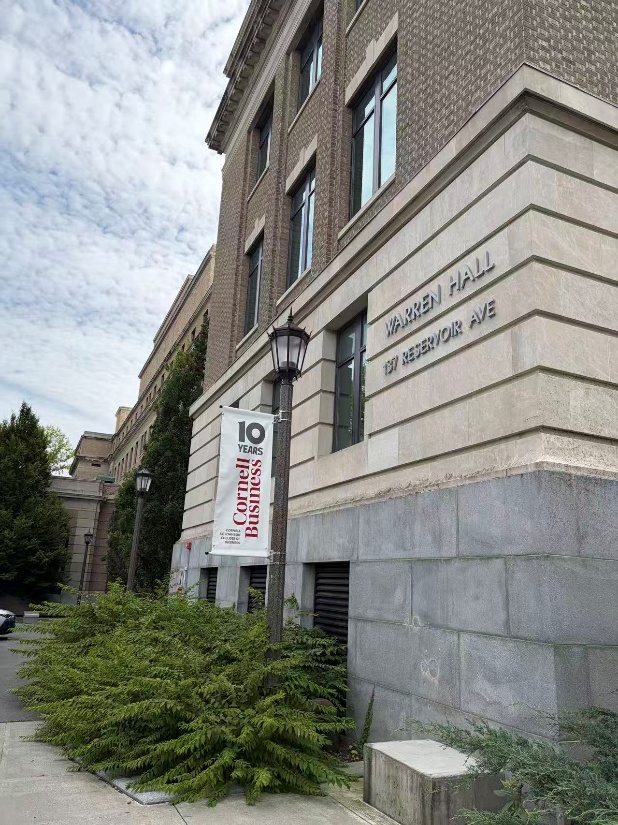
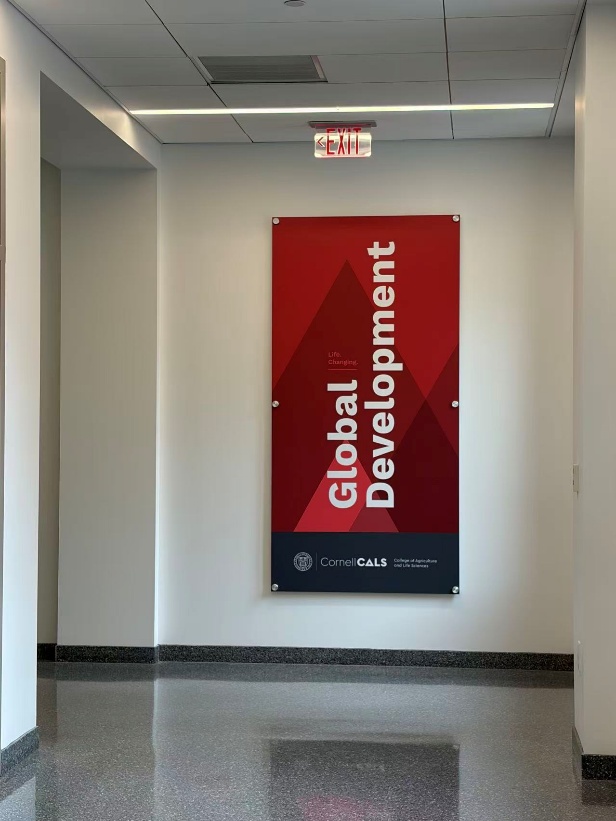
Li Yue, a doctoral student at the Center for Energy and Environmental Policy Research of Beijing Institute of Technology, went to the College of Agriculture and Life Sciences (CALS) at Cornell University in the United States in September 2026 for a one-year joint doctoral training program, funded by the China Scholarship Council’s “National High-Level University Graduate Study Abroad Program.”
Her host supervisor, Chuan Liao, is an Associate Professor at Cornell University’s Ashley School of Global Development and Environment, which is part of CALS. His research focuses on land system governance and sustainable development, with attention to how institutional and technological change affects land use, social well-being, and the ecological environment. His work spans climate change adaptation, sustainable energy transitions, and agri-food systems. His research has been published in international journals including Science, Proceedings of the National Academy of Sciences, and Nature Food. He formerly served as Editor-in-Chief of the journal World Development and is a Coordinating Lead Author of the Transformative Change Assessment of the Intergovernmental Science-Policy Platform on Biodiversity and Ecosystem Services (IPBES).
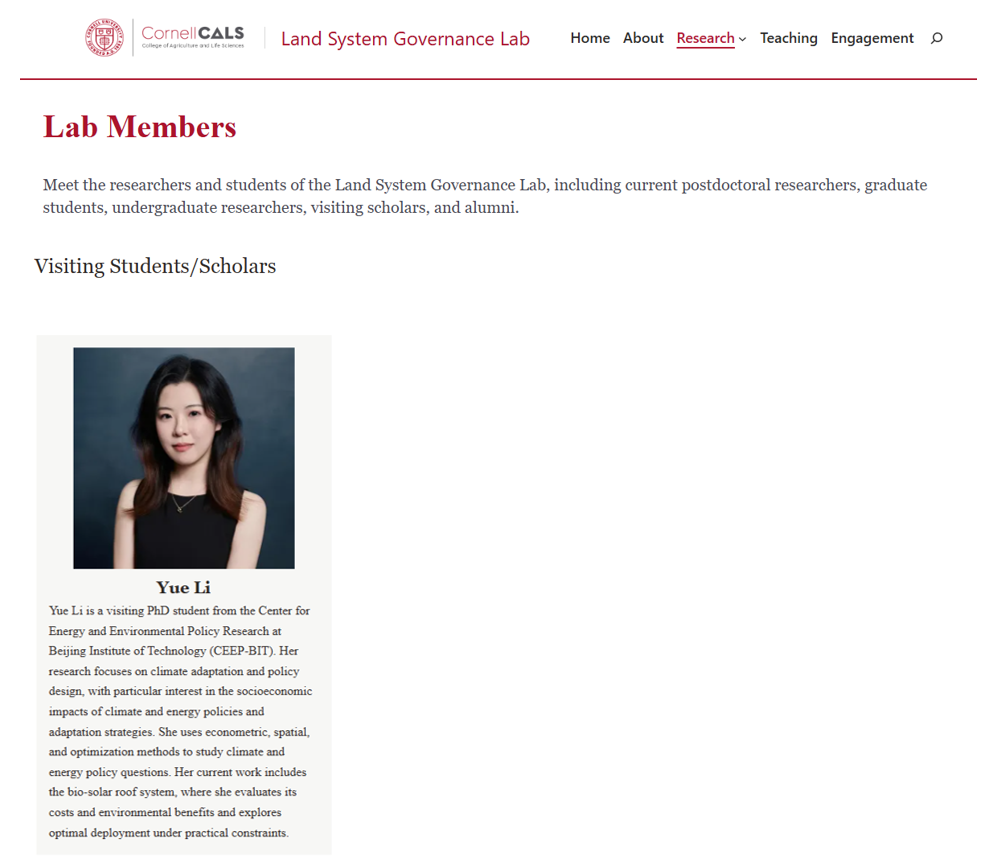
Li Yue’s research centers on climate adaptation and policy design. During her joint training, she will collaborate with her host supervisor on the potential assessment and deployment optimization of photovoltaic green roof systems. Since the start of her visit, Li Yue has regularly reported her progress to her supervisor in China and has held multiple exchanges and discussions with her host supervisor; incorporating the supervisor’s advice, she has further clarified her research approach and refined her research design. At a research group meeting, she introduced the Center for Energy and Environmental Policy Research (CEEP-BIT) to her host supervisor and the team. In the remainder of her joint training, Li Yue will continue to advance her research, actively participate in academic seminars and research exchanges at Cornell University and within her host team, learn from relevant research experience, strengthen her capabilities in theoretical analysis and method application, broaden her research horizons, and explore further opportunities for collaboration.