


Recently, the Center for Energy and Environmental Policy Research at Beijing Institute of Technology (CEEP‑BIT) has officially joined the UN Climate Change Universities Partnership Programme (UNUPP).
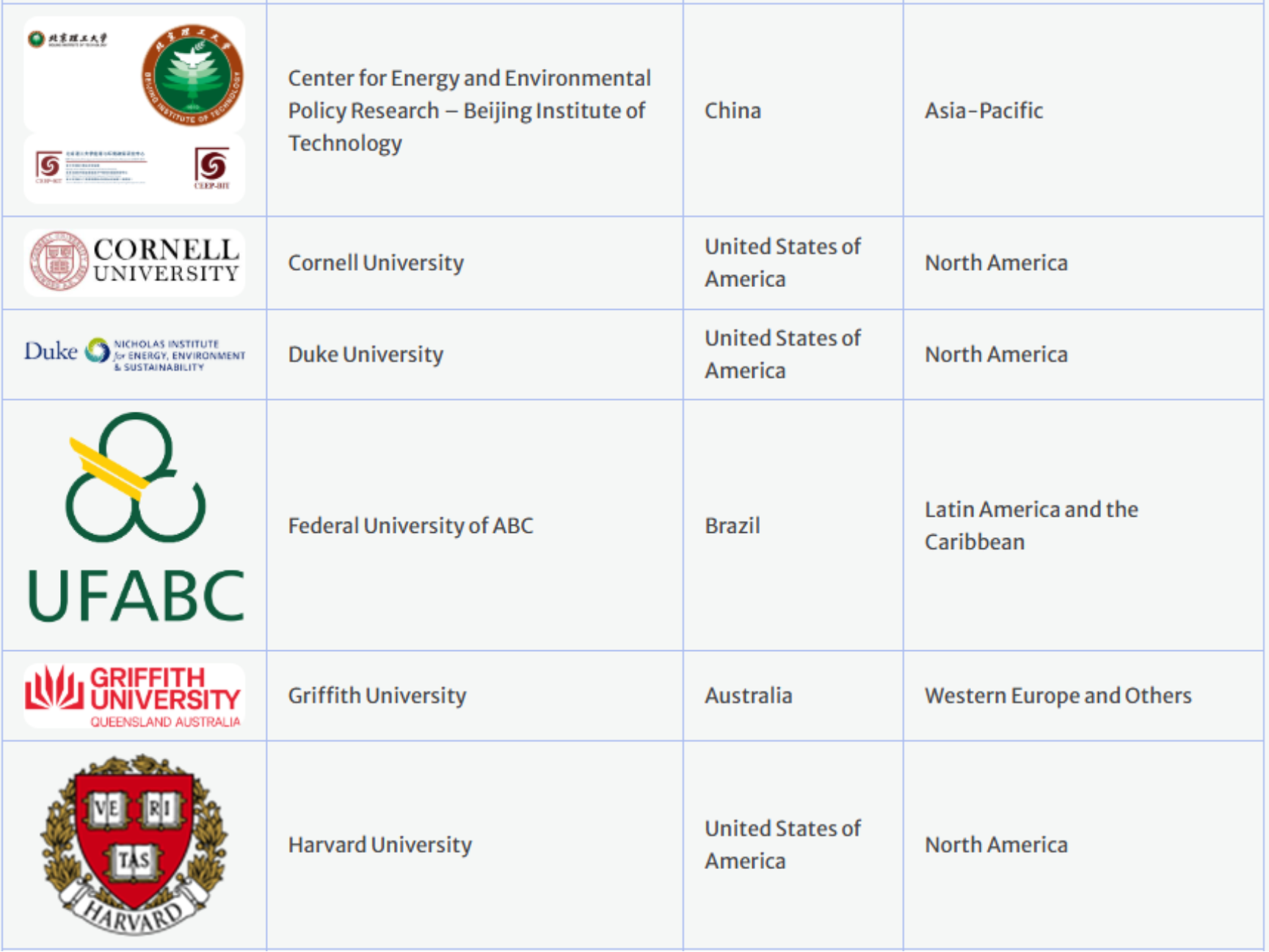
(Screenshot of the official UNUPP partner list)
Launched in 2020, the UN Climate Change Universities Partnership Programme (UNUPP) falls under the Nairobi Work Programme (NWP) of the United Nations Framework Convention on Climate Change (UNFCCC). It constitutes a key industry‑university‑research cooperation mechanism under the Convention. Operated under the impetus of the Subsidiary Body for Scientific and Technological Advice (SBSTA) of the UNFCCC, the programme aims to bridge the gap between research outputs from higher‑education institutions and practical knowledge demands for climate governance. Through scientific research, innovation and policy practice, it generates region‑specific knowledge outputs and solutions to support global climate‑change adaptation and climate‑resilience building.
To date, the programme brings together world‑renowned universities and research institutions including Harvard University, Yale University, and the United Nations University Institute for Environment and Human Security. CEEP‑BIT has been formally included in UNUPP’s official partner roster, making it a Chinese institutional member of the programme.
CEEP‑BIT has long devoted itself to research on energy economics, climate change and environmental policy, building solid systematic research expertise in integrated climate‑change assessment, carbon‑neutrality systems engineering, energy transition, and climate‑policy analysis. Following its accreditation as an observer organization under the UNFCCC in 2023, CEEP‑BIT has now become an official UNUPP partner. This milestone signals closer collaboration between CEEP‑BIT and international climate‑governance bodies and its growing global influence.
Leveraging the UNUPP platform, CEEP‑BIT will further expand its channels for engaging in UN‑related climate‑change activities. It will carry out joint international research, translate climate‑governance research outcomes into practice, and develop international training programmes for graduate students specializing in climate governance. By responding to practical demands of global climate governance, the center will contribute BIT’s academic insights to advancing global climate action and sustainable development.
Official UNUPP website: https://unfccc.int/nwp/unupp
