


Recent research by Professor Yu Biying’s team at the Center for Energy and Environmental Policy Research, Beijing Institute of Technology, reveals that ignoring critical‑metal constraints would substantially overestimate China’s passenger‑vehicle electrification potential while underestimating carbon emissions and system costs during the low‑carbon transition of the transport sector. Adopting a “metal‑energy‑carbon” trade‑off perspective, the study puts forward feasible electrification pathways for China’s passenger vehicles subject to critical‑metal constraints, providing scientific evidence for the coordinated governance of low‑carbon transport transition and critical mineral security. The related paper Reshaping vehicle electrification pathways under the metal‑carbon trade‑off is published in Communications Earth & Environment, a journal under the Nature Portfolio.
With the rapid expansion of electric‑vehicle fleets, demand for critical metals such as lithium, cobalt and nickel may outpace expected supply capacity. Coupled with highly uneven resource distribution and policy shifts in resource‑rich nations, this could trigger metal shortages and price hikes, thereby constraining the low‑carbon transition of passenger vehicles. To address this issue, the study develops the Collaborative Optimization Model for Carbon Emission Reduction and Metal Resource Security (COMERS). It endogenously characterizes interactions between passenger‑vehicle energy consumption and the power sector, as well as the dynamic stock accumulation and supply‑demand balance of critical‑metal raw material inflows and outflows. Incorporating dynamic vehicle‑cost changes driven by metal prices and technological learning, the paper identifies feasible passenger‑vehicle electrification pathways for China under multiple uncertainties including metal supply, product recycling and battery‑technology evolution.
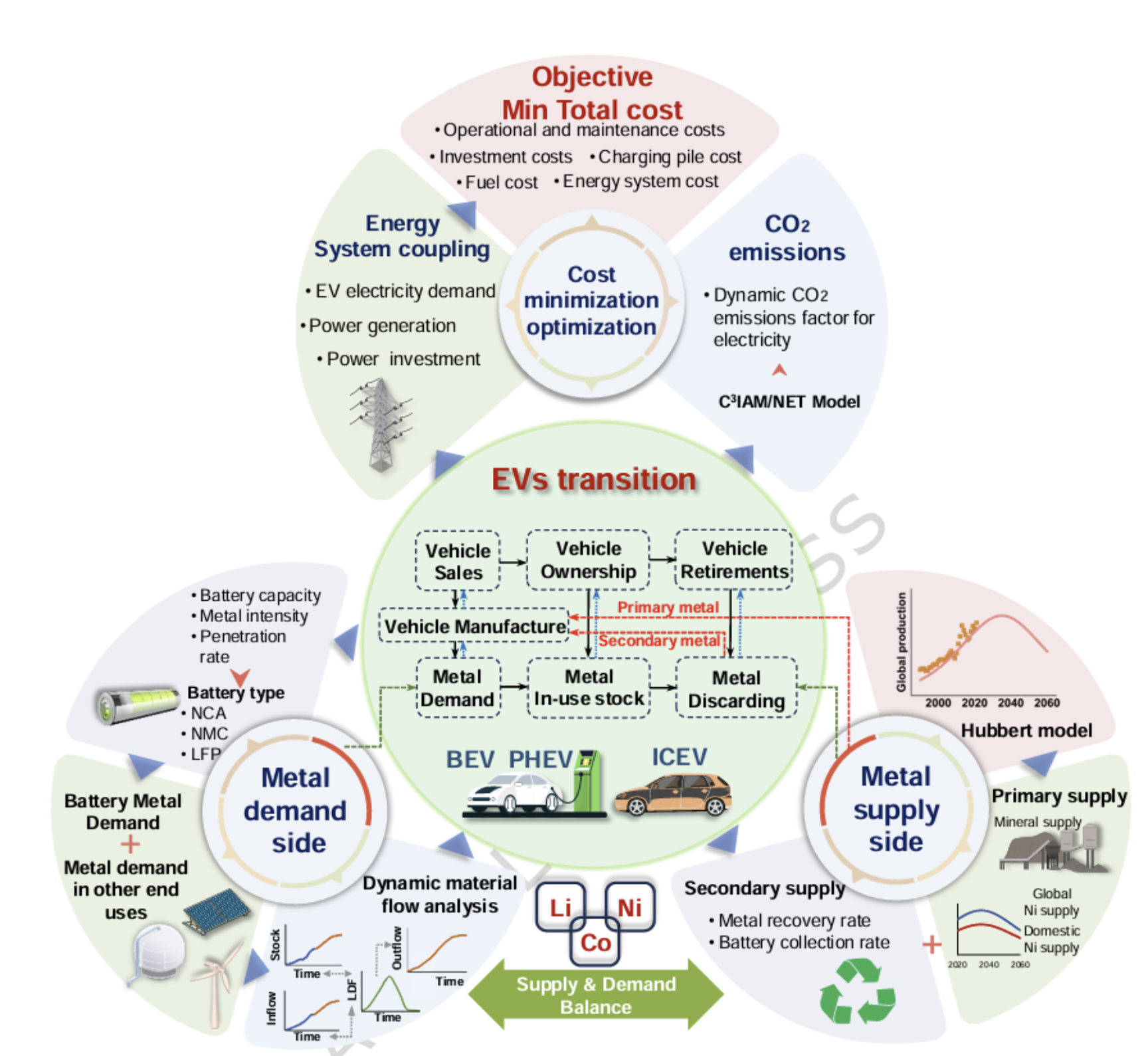
Figure 1 Research framework
The findings show that compared with scenarios without metal constraints, accounting for metal constraints may postpone the carbon‑peak year of the passenger‑vehicle sector by 3‑6 years, reduce the electric‑vehicle stock by up to 42 % in 2060, and raise cumulative CO₂ emissions and total low‑carbon transition costs of the passenger‑vehicle sector by as much as 6.1 billion tons (57 %) and 16.9 trillion RMB (6 %) respectively over 2025‑2060. Lithium and cobalt supplies will act as major bottlenecks for electrification at different stages. Lithium supply‑demand will remain broadly balanced before 2035, after which peaking and declining cobalt output becomes the primary limiting factor. Low‑cobalt or cobalt‑free battery technologies ease pressure on cobalt demand, yet lithium may remain a long‑term constraint.
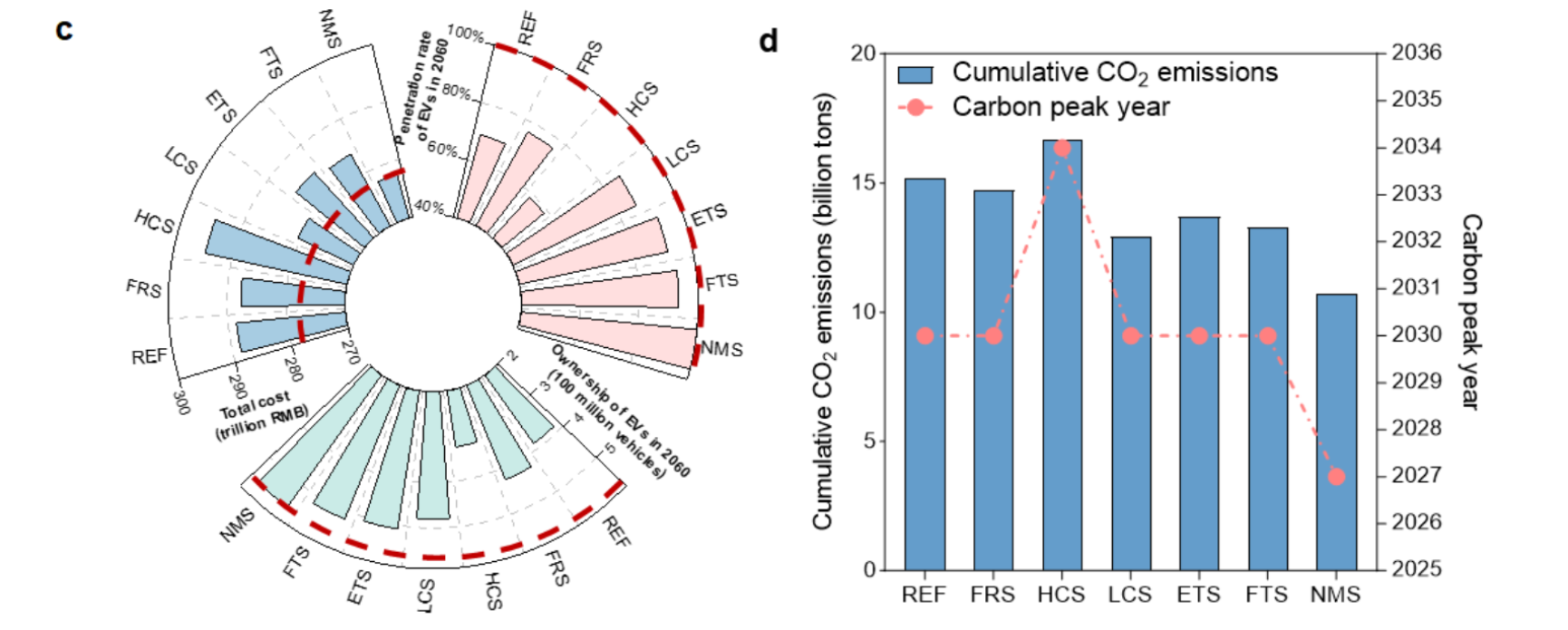
Figure 2 EV stock, transition costs, cumulative CO₂ emissions and carbon‑peak year across scenarios
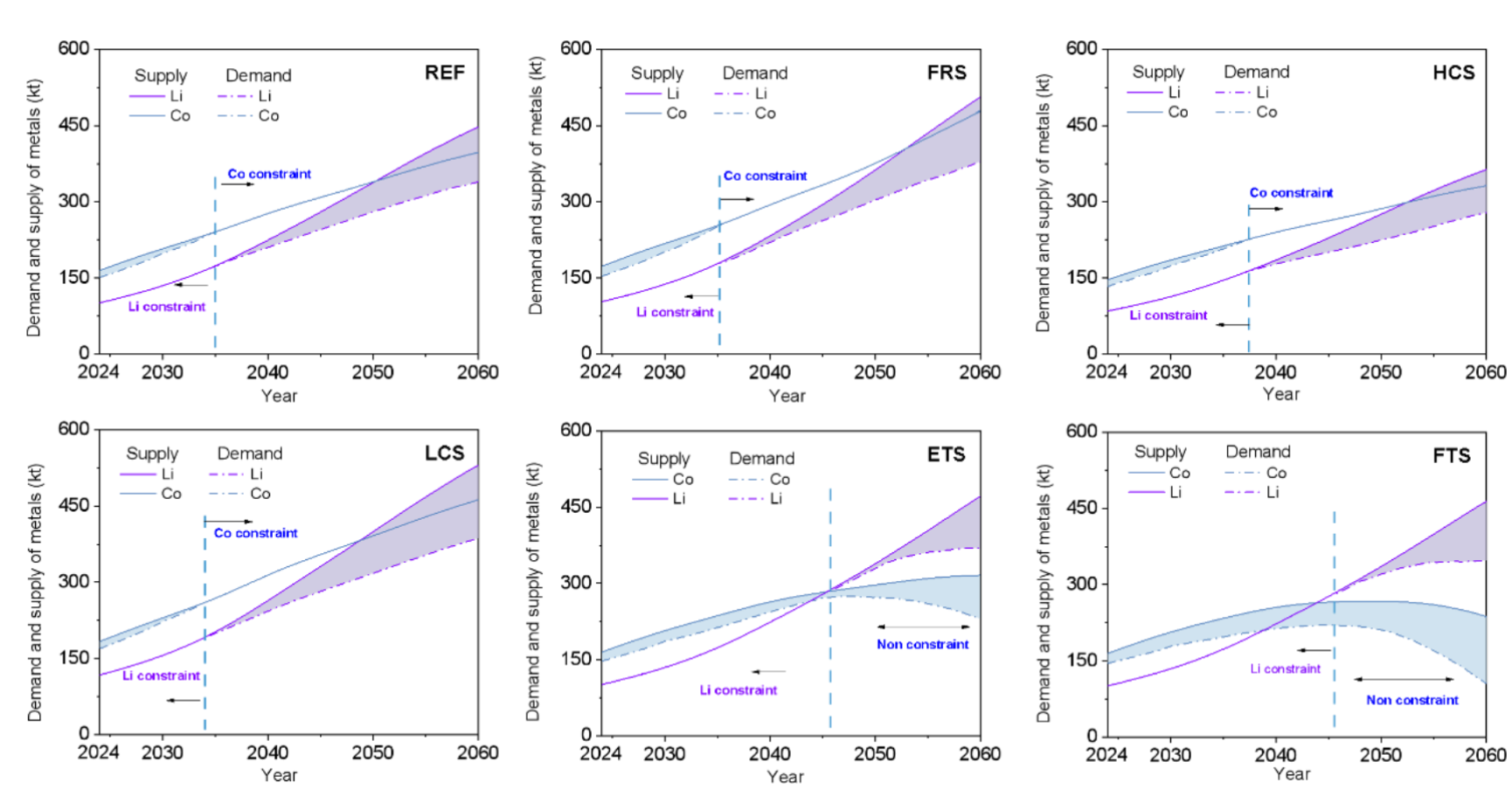
Figure 3 Aggregate supply‑demand balance of critical metals under different scenarios
The research demonstrates that resource recycling and battery‑technology innovation can significantly mitigate metal‑related constraints. Under full‑battery‑recycling conditions in 2060, the electric‑vehicle stock could reach 424 million units; high‑nickel low‑cobalt and cobalt‑free battery routes would further boost battery‑electric‑vehicle stock. Nevertheless, even with 100 % battery recycling and 100 % cobalt‑free batteries, roughly 30 million tons of carbon emissions would persist within the passenger‑vehicle sector in 2060. This indicates that the net‑zero transition of the transport sector must proceed in tandem with the development of zero‑carbon and negative‑carbon power systems. Therefore, for long‑term low‑carbon transport transition, policymakers should look beyond vehicle penetration and emission‑reduction targets and integrate critical‑mineral security, circular‑resource utilization and low‑metal‑intensity battery technologies into comprehensive decision‑making frameworks.
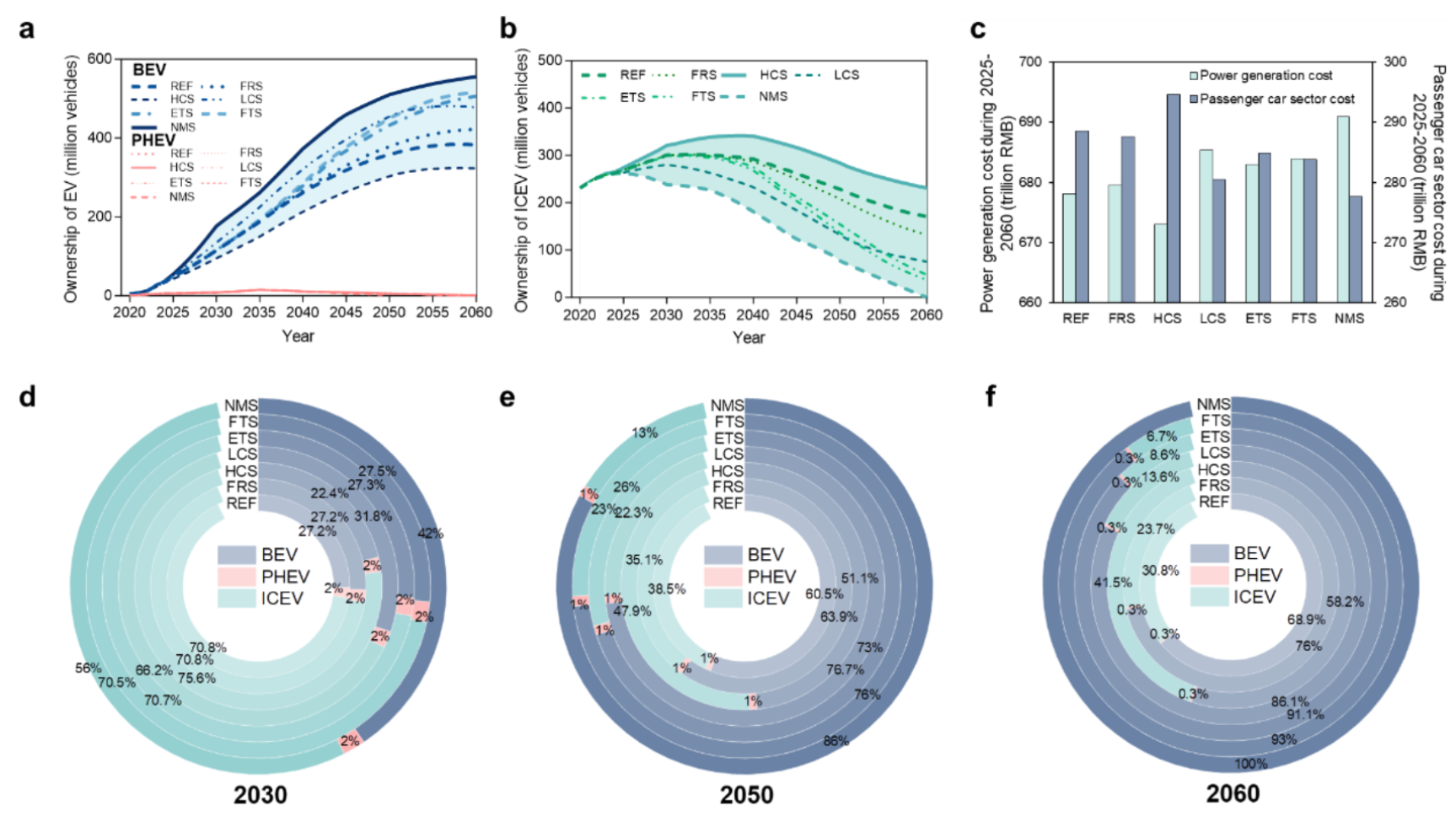
Figure 4 Passenger‑vehicle electrification pathways under different scenarios
This work received support from the National Science Fund for Distinguished Young Scholars, the Basic Science Center Program and Major Program of the National Natural Science Foundation of China, the Beijing Laboratory for System Engineering of Carbon Neutrality, and projects of the Beijing Natural Science Foundation.
Paper details: Ziming Hu, Biying Yu*, Zihao Zhao*, Lan‑Cui Liu*, Yun Wu, Jiahao Fu, Xinzhu Wang, Shijin Zhou & Yi‑Ming Wei*. Reshaping vehicle electrification pathways under the metal‑carbon trade‑off. Commun Earth Environ (2026).
Download link: https://doi.org/10.1038/s43247‑026‑03793‑5
