


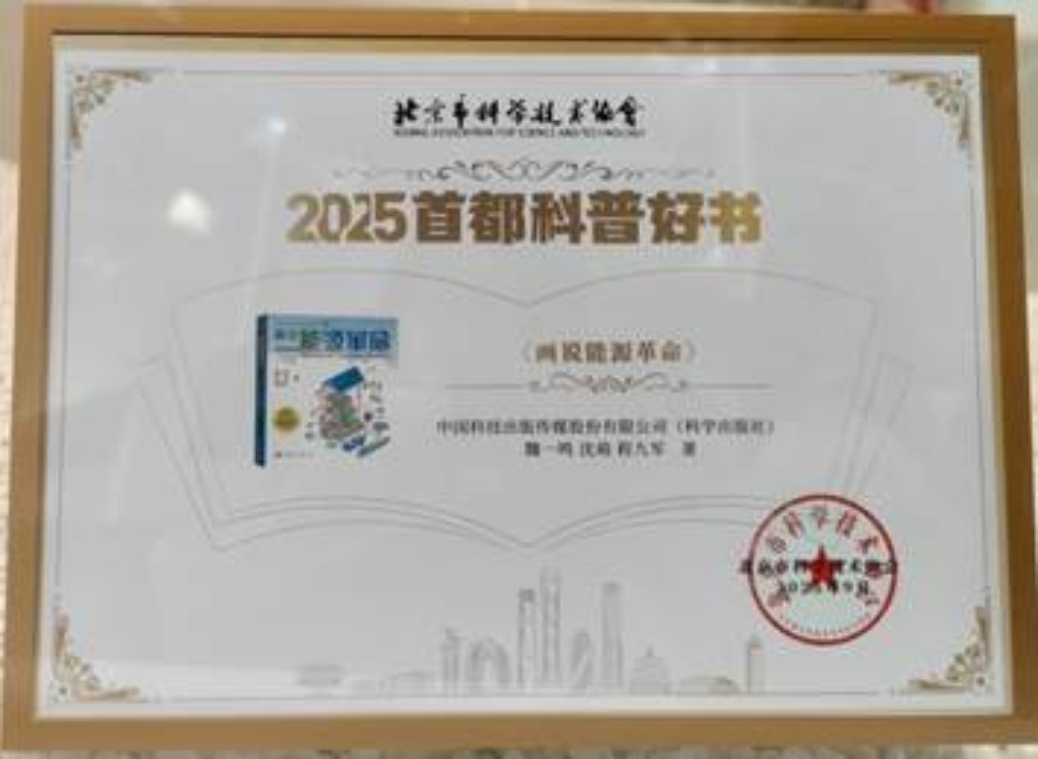
Recently, in the selection of the “2025 Capital Popular Science Excellent Books” hosted by the Beijing Association for Science and Technology, Illustration of the Energy Revolution, a popular science work led by Professor Wei Yiming, Director of the Beijing Laboratory of Carbon Neutrality System Engineering at Beijing Institute of Technology, and co‑authored by Associate Professor Shen Meng and Professor Cheng Jiujun, stood out from 335 participating works and was successfully selected. This publication has also received funding support from the Popular Science Creation and Publication Fund of the Beijing Association for Science and Technology.
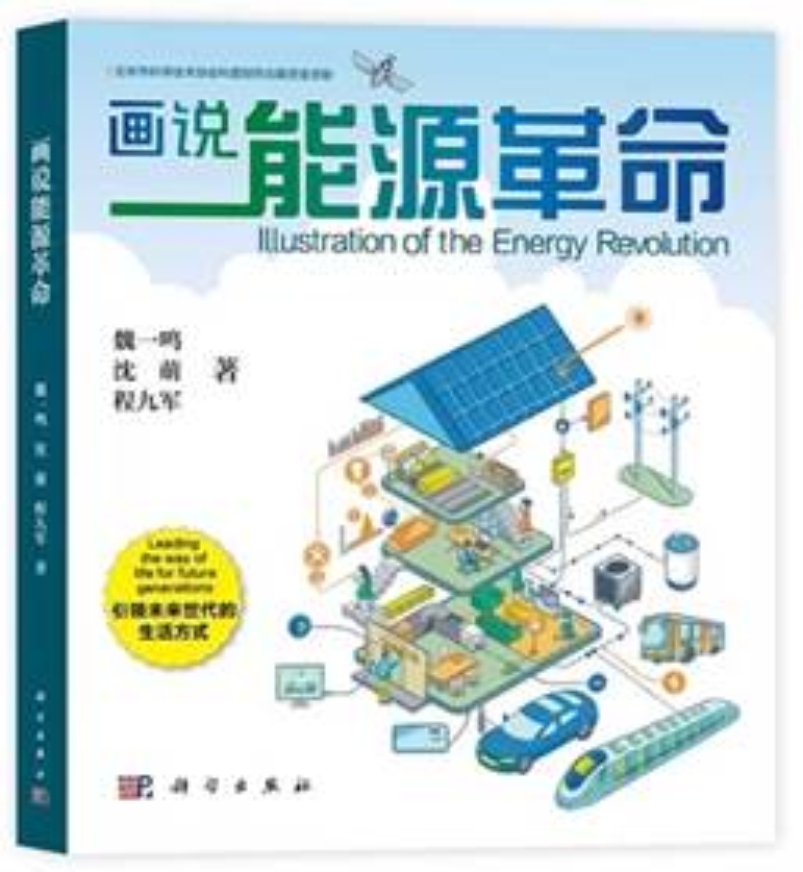
From the early utilization of firewood and coal, the rise of the petroleum industry and the advancement of the electrification era, to the gradual formation of a diversified energy structure — every leap marks a profound transformation in energy utilization modes, driving human civilization toward a more efficient and sustainable future. Today, as artificial intelligence deeply empowers the energy sector, a new wave of revolution has arisen. It is against this backdrop that Illustration of the Energy Revolution came into being. Adopting the unique format of “knowledge graph + visual narration”, the book offers a systematic interpretation of this far‑reaching transformation.
Moving beyond conventional popular‑science frameworks, the book unfolds in four “movements”. The Prelude (Chapters 1 and 2) thoroughly deconstructs the three‑fold dilemma confronting traditional energy systems and lays bare the inevitability of transformation. The Second Movement (Chapters 3‑6) presents innovative scenarios for high‑tech‑enabled energy transition, portraying technological breakthroughs including the Energy Internet breaking time‑space boundaries, distributed energy reshaping supply‑demand relations, and energy big‑data enabling precise regulation. The Third Movement (Chapters 7‑10) guides readers through real‑world daily applications of smart energy, vividly showcasing innovative practices such as urban energy networks, coordinated smart transportation, intelligent human‑habitat interaction and perception‑enabled green buildings. The Finale (Chapter 11) envisages the future and sparks readers’ boundless imagination concerning the energy revolution.
Professor Wei Yiming’s team at the Beijing Laboratory of Carbon Neutrality System Engineering, Beijing Institute of Technology, has long devoted itself to research on carbon emission reduction and global climate governance, carrying out systematic studies on energy‑system transition as well as climate‑related strategies and policies. Extending its professional expertise to the frontier of science communication, the team spent six years meticulously developing Illustration of the Energy Revolution. Complex operational mechanisms and cutting‑edge technologies of energy systems are rendered into visual narratives built upon hand‑drawn illustrations and accessible popular‑science language, constructing an intellectual bridge toward the era of smart energy.
More than a popular‑science volume on the energy revolution for general audiences, this book can serve as teaching reference material for interdisciplinary studies at the intersection of energy technology and artificial intelligence, and furnish innovative insights for practitioners in relevant sectors. It contributes to building broad social consensus around energy transition and galvanizes public engagement to support China’s “dual carbon” goals.
