


As a policy instrument for achieving low‑cost emission reduction via market mechanisms, the carbon emissions trading system constitutes an important institutional arrangement for China to deliver its dual‑carbon goals. The research team led by Professor Wang Ke from the Center has long focused on carbon‑market effect evaluation. Carrying out systematic research on the performance of China’s carbon market across key dimensions including emission‑reduction outcomes, cost efficiency and market incentives, the team has uncovered core features and optimization directions for the existing regime. Relevant findings have recently been published in international journals such as iScience, The Energy Journal, Structural Change and Economic Dynamics, and Nexus.
I. Cost‑Efficiency Perspective: The “Trade Effect” of Carbon Market Remains Insufficiently Materialized
Accurately evaluating the cost efficiency of carbon markets is critical for improving climate policies centered on carbon pricing. Most conventional assessments focus heavily on emission‑reduction performance while overlooking the institutional advantage of carbon markets in delivering low‑cost abatement.
The study published in Nexus puts forward the concept of the trade effect, which refers to resource allocation optimization realized as the trading mechanism drives marginal abatement costs toward convergence. Empirical evidence based on firm‑level data from 2010 to 2015 suggests that China’s pilot carbon markets have not generated significant convergence in marginal abatement costs. The overall trade effect is insignificant and cannot be observed across different regions or industrial sectors.
Further analysis identifies major restraining factors: relatively loose allowance allocation, high institutional uncertainty, substantial transaction and compliance costs, and insufficient trading capacity among regulated enterprises. Recommendations include tightening total allowance caps, optimizing allowance distribution, refining price‑formation mechanisms, and strengthening the Monitoring, Reporting and Verification (MRV) system to unlock the cost‑efficiency advantages of carbon markets.
II. Emission‑Reduction Perspective: Limited Incremental Abatement Effect in Pilot Carbon Markets, Emerging Dual Abatement Effect in the National Carbon Market
Whether a carbon market can cut emissions effectively serves as the core metric for judging its effectiveness.
For pilot carbon markets: Adopting the perspective of incremental impact, the study published in The Energy Journal identifies the net effect of carbon‑market pilots using province‑industry panel data covering 2006‑2019. After controlling for the existing Energy‑Conservation and Emission‑Reduction Target Responsibility System (ECCA‑TRS), the pilots show no statistically significant additional emission‑reduction effect. This indicates that China’s emission cuts still largely rely on administrative‑driven policies, and pilot carbon markets failed to deliver substantive regulatory constraints.
Key causes for the lack of incremental abatement include loose total allowance caps, low carbon prices, and crowding‑out of market mechanisms caused by overlapping policies. The paper proposes clarifying policy division of labour and strengthening the total‑cap constraint function of carbon markets so that they can gradually become the core abatement instrument for covered sectors.
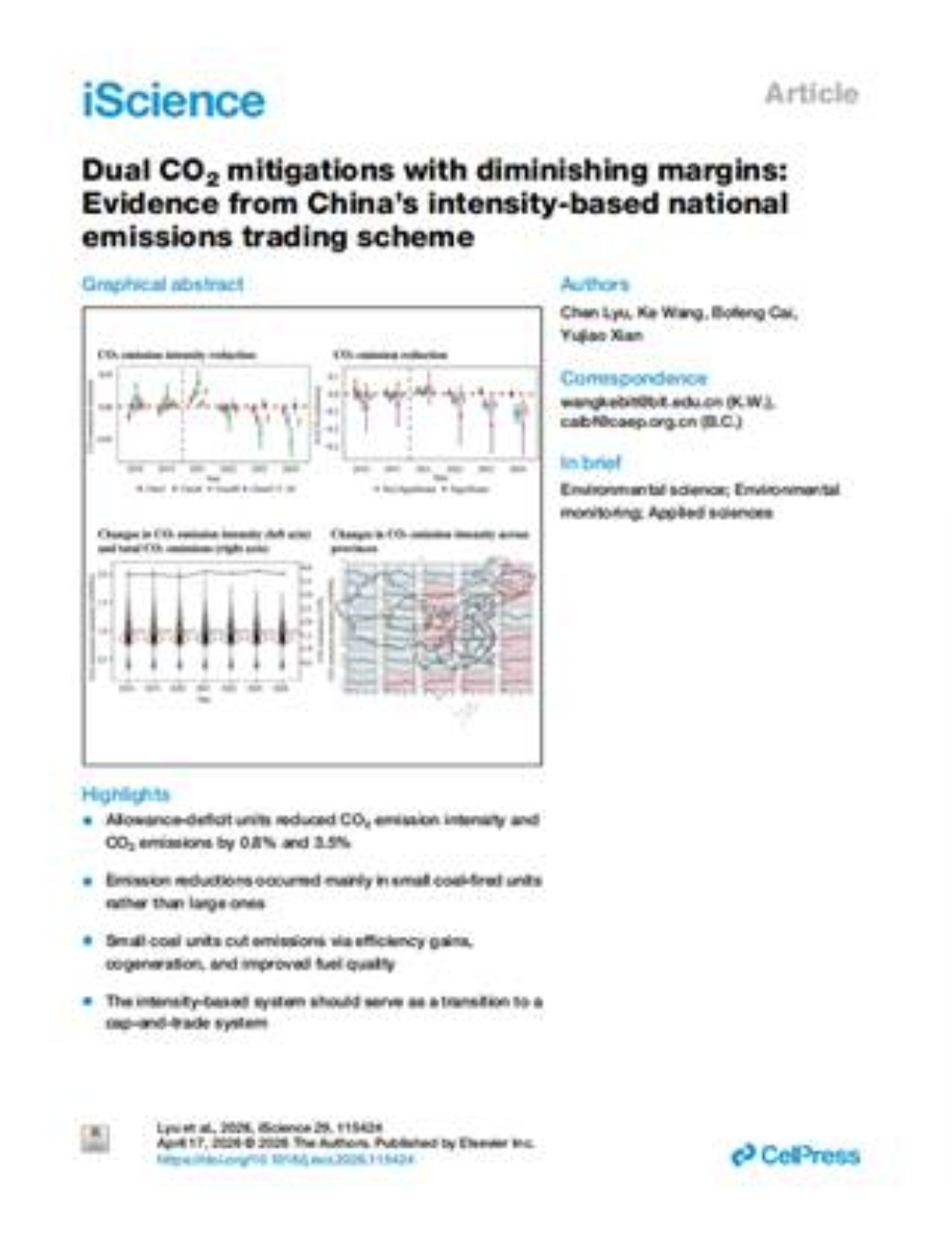
For the national carbon market: Drawing on thermal power unit‑level data from 2018 to 2024, the study published in iScience evaluates how compliance pressure influences carbon emissions of power‑generating units. Results show that units with allowance shortages witness roughly 0.8 % lower emission intensity and 3.5 % lower total emissions, demonstrating a dual abatement effect on both emission intensity and absolute emissions.
Nevertheless, overall abatement remained modest in the initial market phase due to lenient benchmarks and low carbon prices. Emission‑reduction effects grew markedly after 2023 as benchmarks tightened and carbon prices rose. Structurally, abatement is mainly observed in small‑capacity coal‑fired units, which achieve lower emission intensity through energy‑efficiency improvement, higher heat‑supply ratios and better‑quality fuel. By contrast, the national carbon market exerts limited influence on large‑capacity coal‑fired units.
Heterogeneous responses are also observed: local state‑owned enterprises and private firms respond more strongly than central SOEs; self‑owned power plants outperform public utility plants; units from non‑pilot regions outperform those from former pilot regions; and technologically‑backward units outperform advanced units. This suggests that under the current intensity‑based framework, most low‑cost abatement potential resides in units with flexible organization‑management, flexible product portfolios or lower baseline technology levels.
The intensity‑based carbon market is justifiable for the transition phase as it imposes no output constraints. However, as low‑cost abatement opportunities diminish, the national carbon market should shift from the existing intensity‑based mechanism toward a cap‑and‑trade regime to support absolute emission‑reduction targets.
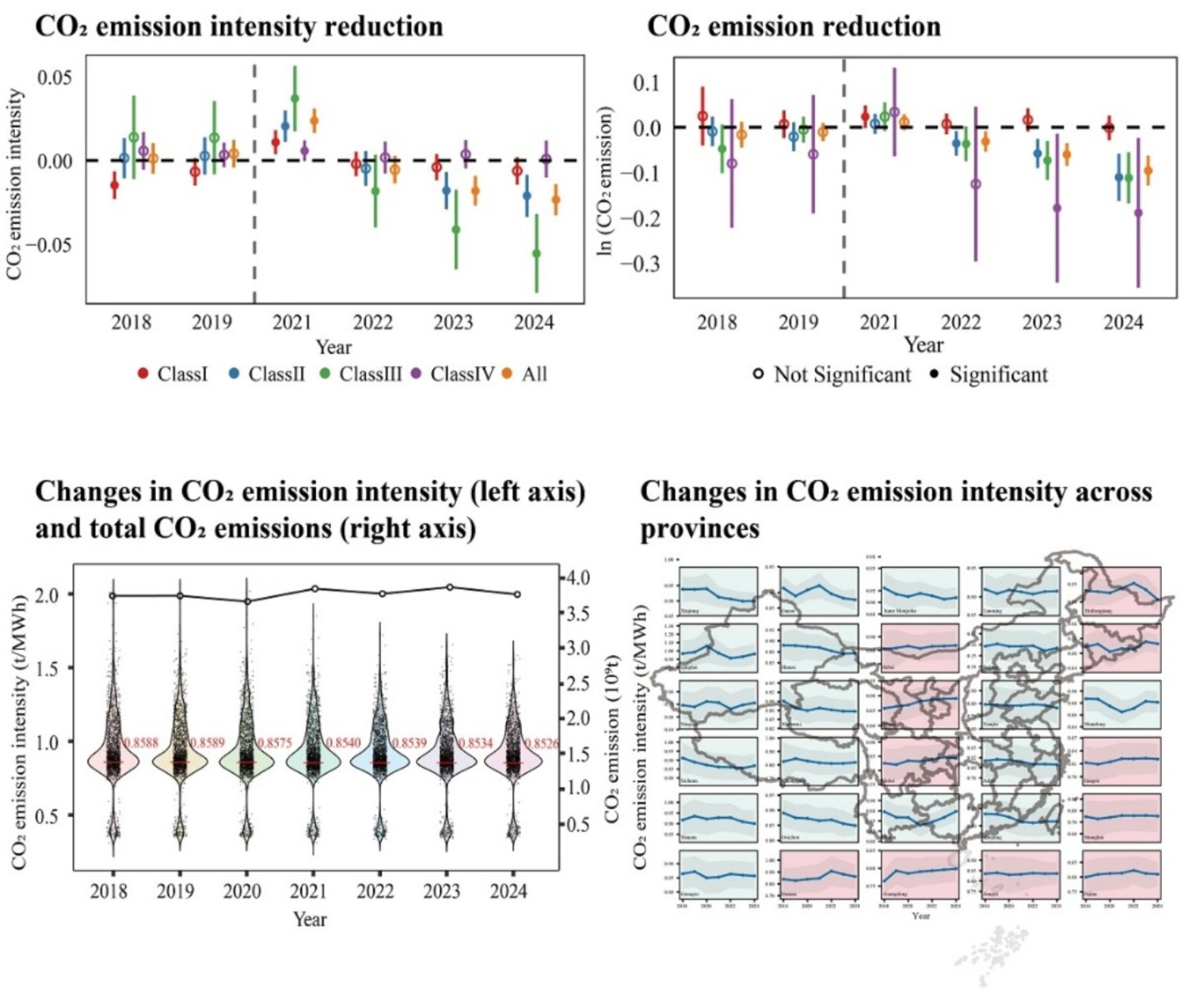
Assessment of emission‑reduction effectiveness of the national carbon market
III. Market‑Incentive Perspective: National Carbon Market Generates Economic Incentives for Corporate Abatement
Market‑based incentives represent a vital dimension for evaluating carbon‑market performance, directly determining whether the system can guide participant behaviour and improve resource‑allocation efficiency.
Using firm‑level data for 2019‑2022, the study published in Structural Change and Economic Dynamics assesses economic incentives for corporate abatement created by the national carbon market. Findings indicate that the market delivers abatement incentives via trading profits, yet a certain Matthew effect exists: larger emission‑reduction volumes correspond to higher marginal returns.
Meanwhile, central SOEs and enterprises with prior pilot‑market experience show unexpectedly low trading participation, and gas‑fired units suffer from insufficient incentives. Market incentives have strengthened across compliance cycles but still leave considerable room for improvement. Suggested measures include reducing free allowances, tightening compliance obligations, and optimizing allowance design to continuously reinforce incentive functions.
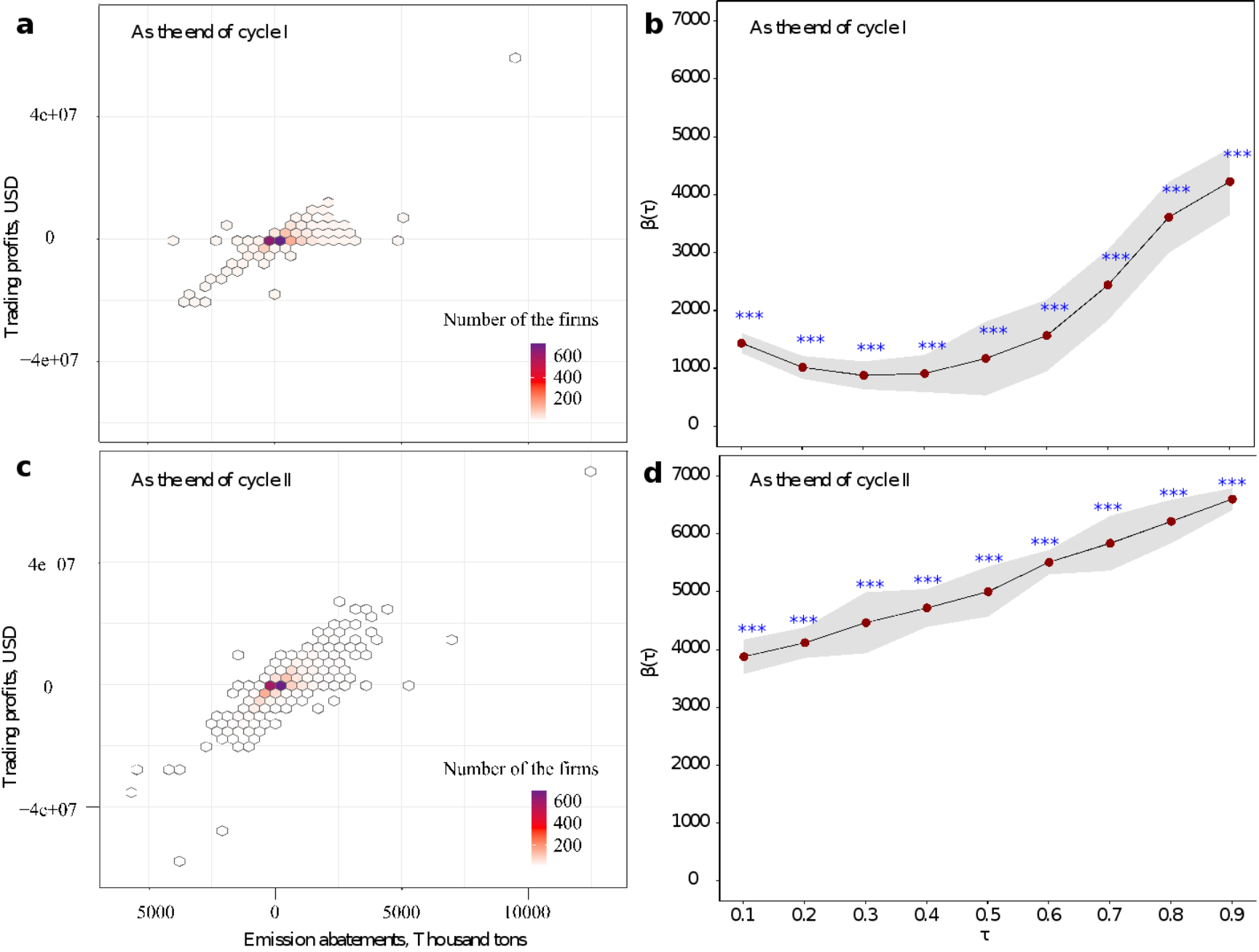
Assessment of incentive effectiveness of the national carbon market
As the national carbon market keeps expanding its coverage and refining its institutional framework, it will play an increasingly critical role in delivering dual‑carbon goals, optimizing resource allocation and advancing green low‑carbon transition. The Center will continue conducting systematic research on carbon‑market theories and policies, deepen understanding of market‑operation rules, and provide solid scientific support and policy references for the high‑quality development of China’s national carbon market.
Relevant paper information:
Shi, X., Yu, J., Wang, K., Liu, P., Wei, Y. (2025). When Cost-Efficiency is Ignored, Carbon Market Success is Overstated. Nexus, 2(3), 100082. https://doi.org/10.1016/j.ynexs.2025.100082
Lu, M., Pollitt, M., Wang, K., Wei, Y. (2025). The incremental impact of China’s carbon trading pilots on carbon abatement. The Energy Journal, 46(6) 211239. https://doi.org/10.1177/01956574251367300
Lyu, C., Wang, K., Cai, B., Xian, Y. (2026). Dual CO2 Mitigations with Diminishing Margins: Evidence from China’s Intensity-Based National Emissions Trading Scheme. iScience, 115424. https://doi.org/10.1016/j.isci.2026.115424
Lyu, C., Wang, K., Shi, X., Cai, B., Yan, G. (2025). Effectiveness of market incentives in China’s National Emission Trading Scheme. Structural Change and Economic Dynamics, 76, 251-261. https://doi.org/10.1016/j.strueco.2025.12.011
