


Research Summary
Recently, the research team led by Professor Tang Baojun from the Center for Energy and Environmental Policy Research at Beijing Institute of Technology published a paper entitled Strategies for improving carbon emission efficiency of municipal solid waste management system in western China: A transition toward environmental equity in Environmental Science & Technology, a top‑ranked journal in environmental science. This work was completed in collaboration with Professor Li Ru from the Business School of Chengdu University of Technology.
Based on a coupled model of greenhouse‑gas emissions and economic costs, the study assessed the carbon emission efficiency of municipal solid waste management systems in western China from 2008 to 2023. It identified systemic risks of renewable‑energy poverty under multi‑scale spatial patterns, revealed spatial disparities in environmental equity, and constructed 90 policy‑combination scenarios to explore pathways for carbon‑emission‑efficiency improvement.
The results show that carbon emission efficiency presents a distinct “core‑periphery” spatio‑temporal evolutionary pattern across western China, with continuously widening inter‑regional gaps. Unbalanced waste‑to‑energy development further exacerbates systemic renewable‑energy‑poverty risks, which exhibit a “plate‑axis‑patch” agglomeration pattern across multiple spatial scales and cover approximately 70 % of zero‑waste city pilot sites. For single‑link optimization, waste‑to‑energy conversion technologies deliver the greatest potential for improving carbon emission efficiency. For multi‑link coordinated optimization, enhanced source‑sorting and recycling strategies hold the key to boosting system sustainability.
The region‑integrated collaborative waste‑governance framework developed in this study provides replicable regional experience for advancing environmentally‑equitable and energy‑justice‑oriented transitions in the waste sector, and offers actionable decarbonization pathways for emerging economies undergoing rapid urbanization worldwide.
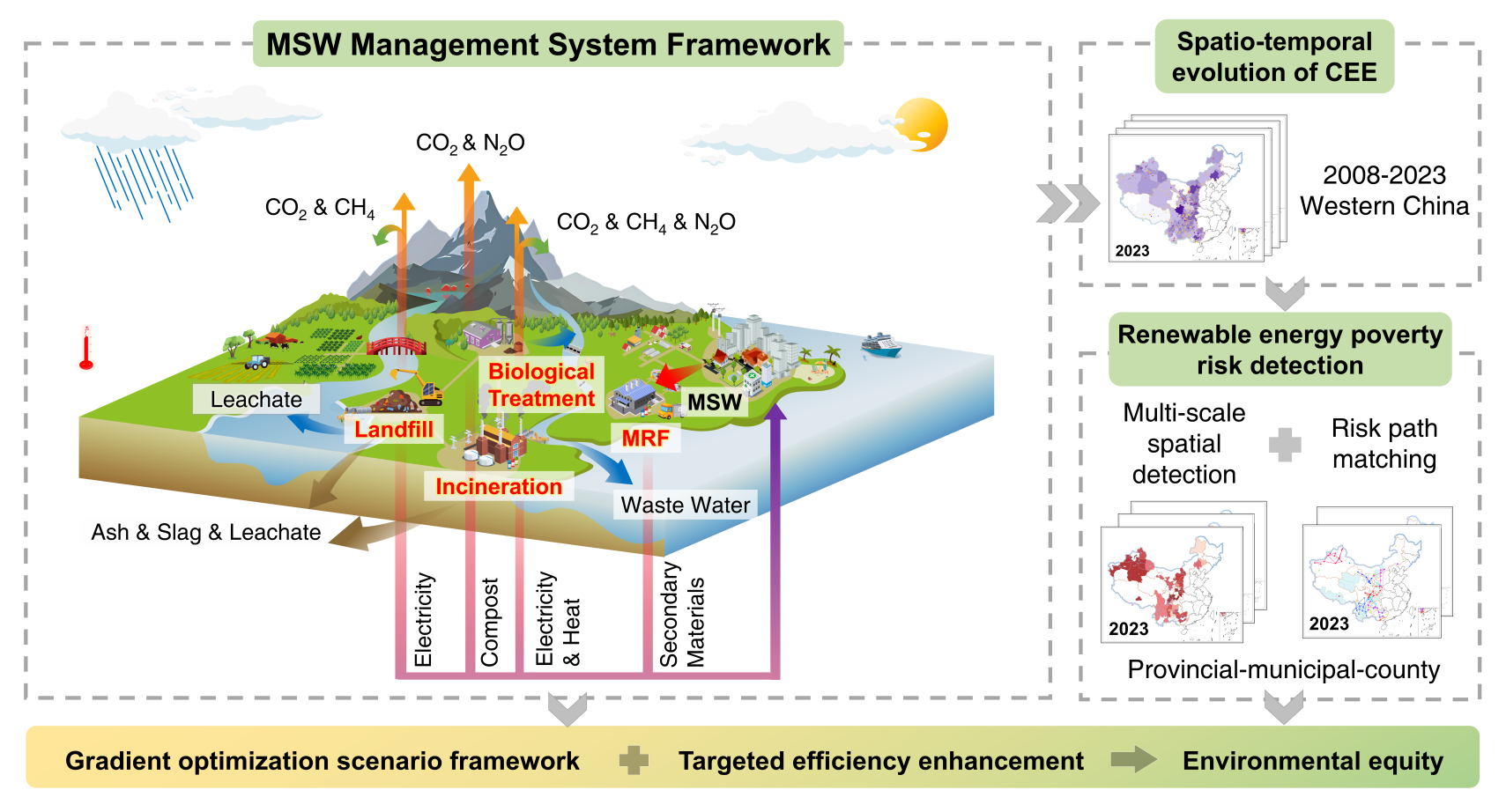
Graphical Abstract
Introduction
Realizing the collaborative resource utilization of multi‑source solid waste and fostering a climate‑neutral circular economy constitutes a vital approach for modern municipal solid‑waste management systems to tackle the triple planetary crises of climate change, pollution‑and‑waste generation, and biodiversity loss. As the world’s largest generator of municipal solid waste, China is undergoing profound shifts in waste‑management models. Municipal solid‑waste incineration facilities are gradually expanding into county‑level territories, bringing about marked geographical shifts in waste‑disposal pressures. Waste‑incineration capacity in western China is expanding far faster than in the mature waste‑treatment regions of eastern China and the national average.
Nevertheless, rapid technological leapfrogging has aggravated mismatches between regional facility‑capacity expansion and actual waste‑disposal loads, resulting in systemic idleness and operational inefficiency. Renewable‑energy‑poverty risk has thus become one of the major threats to modern municipal solid‑waste management. Such risks propagate across multi‑level administrative hierarchies and spatial value networks, undermining environmental equity and economic affordability in western China’s pursuit of circular‑economy goals.
From a multi‑scale spatial perspective, this study unpacks the endogenous correlation between environmental efficiency and energy justice within municipal solid‑waste management systems. It further identifies optimal balanced resource‑utilization strategies that take economic affordability into account, delivering critical scientific evidence for environmentally‑just transitions in emerging economies and regions worldwide grappling with expanding waste‑to‑energy capacity alongside lagging operational performance.
Key Illustrative Explanation
Spatio‑temporal evolution of carbon emission efficiency in municipal solid‑waste management systems
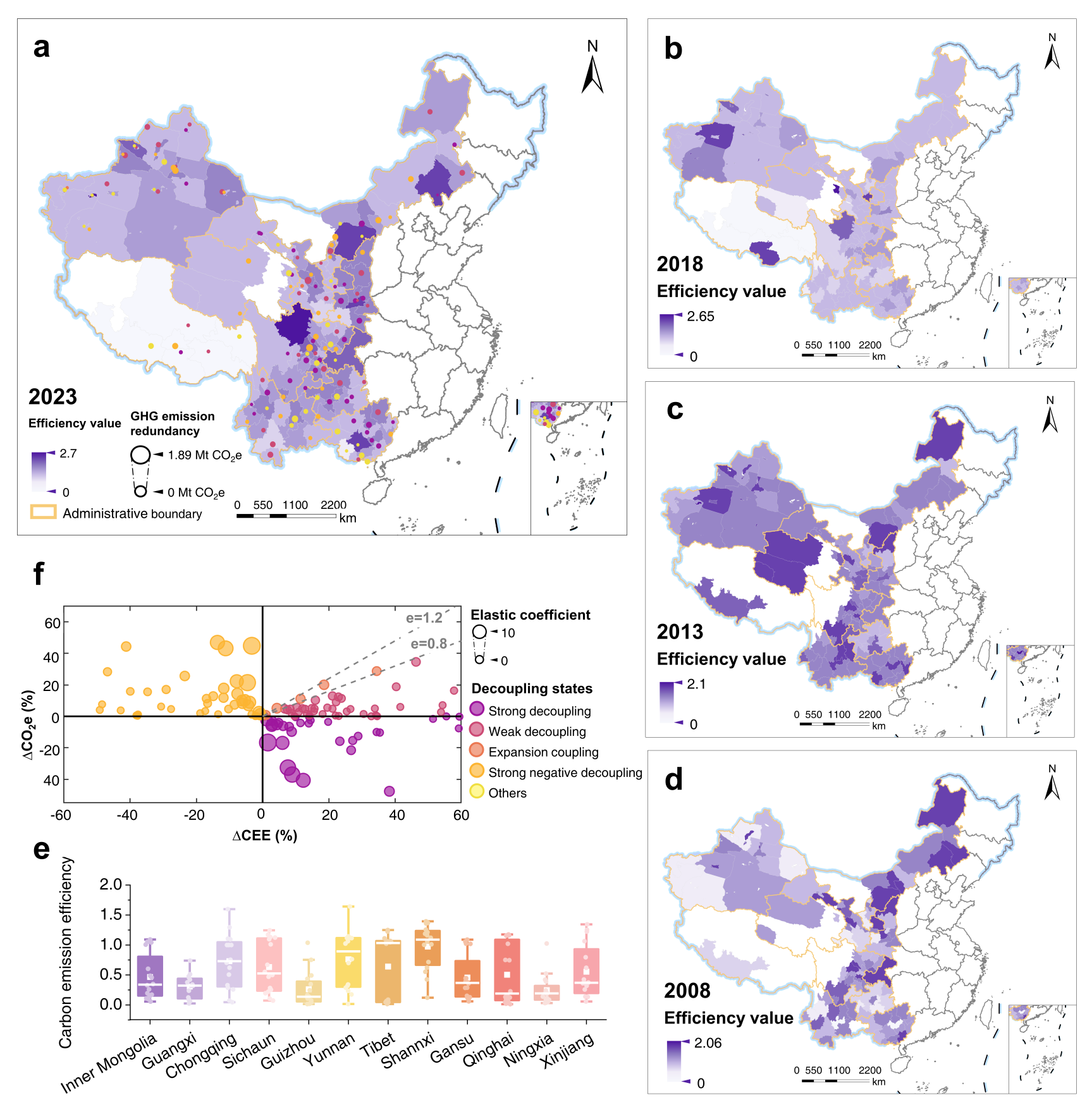
Figure 1. Spatio‑temporal evolutionary characteristics and decoupling‑state test for carbon emission efficiency of municipal solid‑waste management systems in western China.
By deeply coupling macro‑economic constraints and micro‑operational features of municipal solid‑waste management systems, the carbon‑emission‑efficiency measurement framework developed in this study identifies a pronounced “core‑periphery” spatio‑temporal efficiency pattern in western China. Economically‑active high‑efficiency zones (e.g., Guanzhong, Chengdu‑Chongqing) have long co‑existed with peripheral regions lagging in green‑system development (e.g., Yinchuan, Guiyang). Gaps between high‑efficiency core cities and their surrounding counties keep widening. Economic gains along waste value chains tend to concentrate in advanced core regions, while disproportionate process‑related environmental and energy burdens spill over into less‑developed areas, giving rise to distributive energy poverty.
Greenhouse‑gas emission redundancies further quantify the environmental costs stemming from such mismatches. Some core cities (e.g., Chengdu, Urumqi) fail to achieve optimal allocation via agglomeration effects. Instead, load mismatches generate emission redundancies of up to 1.8971 million tonnes and 0.9371 million tonnes respectively. Without fair load‑distribution mechanisms, capacity expansion leads to systemic efficiency losses.
Aggregation of systemic clean‑energy‑poverty risks
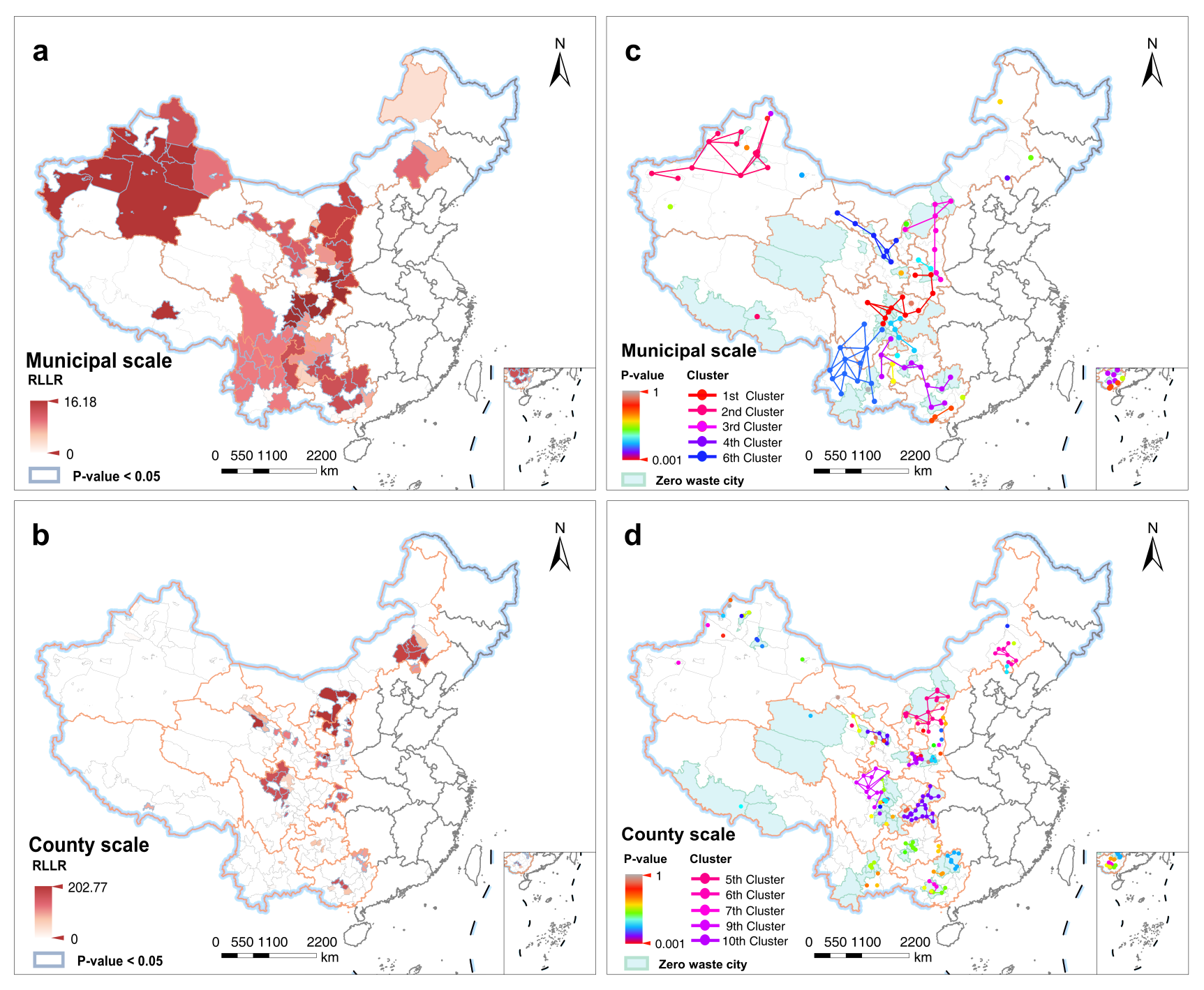
Figure 2. Agglomeration of renewable‑energy‑poverty risks within municipal solid‑waste management systems.
Adopting a flexible‑shape spatial‑scan econometric method, this study discusses potential renewable‑energy‑poverty risks induced by low carbon‑emission efficiency during municipal solid‑waste‑management transitions under a multi‑scale framework. It characterizes risk‑agglomeration features for cross‑regional collaborative waste disposal at provincial, municipal and county levels (Figure 2). Under multi‑scale spatial scanning, risks exhibit hierarchical “plate‑axis‑patch” decomposition across provincial‑municipal‑county scales, with up to 89.7 % spatial nesting ratio and local polarization at municipal and county levels.
From the horizontal spatial‑network perspective, 136 statistically‑significant high‑risk units identified at county‑level show an 89.7 % spatial‑nesting ratio with municipal‑level high‑risk clusters. Risk intensity within clusters displays obvious polarized agglomeration at finer spatial resolution. From the vertical‑administrative‑system perspective, municipal‑level high‑risk axes are unevenly distributed at county‑level resolution, reflecting spatio‑temporal mismatches between static facility layouts and dynamic waste‑flow supplies.
On one hand, extensive physical spatial constraints hinder region‑integrated comprehensive waste governance in western China. Large inter‑county distances impose high transportation costs for geographically‑vast cities such as Chifeng (RR=99.6), reducing the economic feasibility of transporting peripheral waste to central facilities. On the other hand, administrative‑boundary segmentation creates rigid constraints for cross‑regional collaborative‑disposal networks. Core counties and districts with regional service functions within the Chengdu‑Chongqing‑Guanzhong axis (RR>44) are often equipped with disposal capacity far exceeding local demand. Once cross‑border coordination and scheduling are blocked, the system faces risks of capacity idleness and stranded assets.
Furthermore, by overlaying spatial‑scan‑derived high‑risk agglomeration zones of renewable‑energy poverty against the list of 36 western‑China zero‑waste cities designated during China’s 14th Five‑Year Plan period, the study obtains spatial‑matching patterns between risk clusters and the zero‑waste‑city list (Figure 2c, 2d). At municipal level, approximately 69.44 % of western zero‑waste cities fall within statistically‑significant high‑risk zones (P<0.05). Around 74.15 % of cities inside significant high‑risk agglomeration clusters are not yet included in the zero‑waste‑city initiative and remain in the early stage of building resilient municipal solid‑waste management systems. At county‑level, pronounced spatial imbalance persists within individual high‑risk city clusters. Disposal pressures tend to spill over from high‑level core hubs toward peripheral counties and districts with low infrastructure resilience, where peripheral units bear disproportionate risk burdens mismatched against their energy‑recovery benefits.
Driving factors behind spatial differentiation in system‑sustainability performance
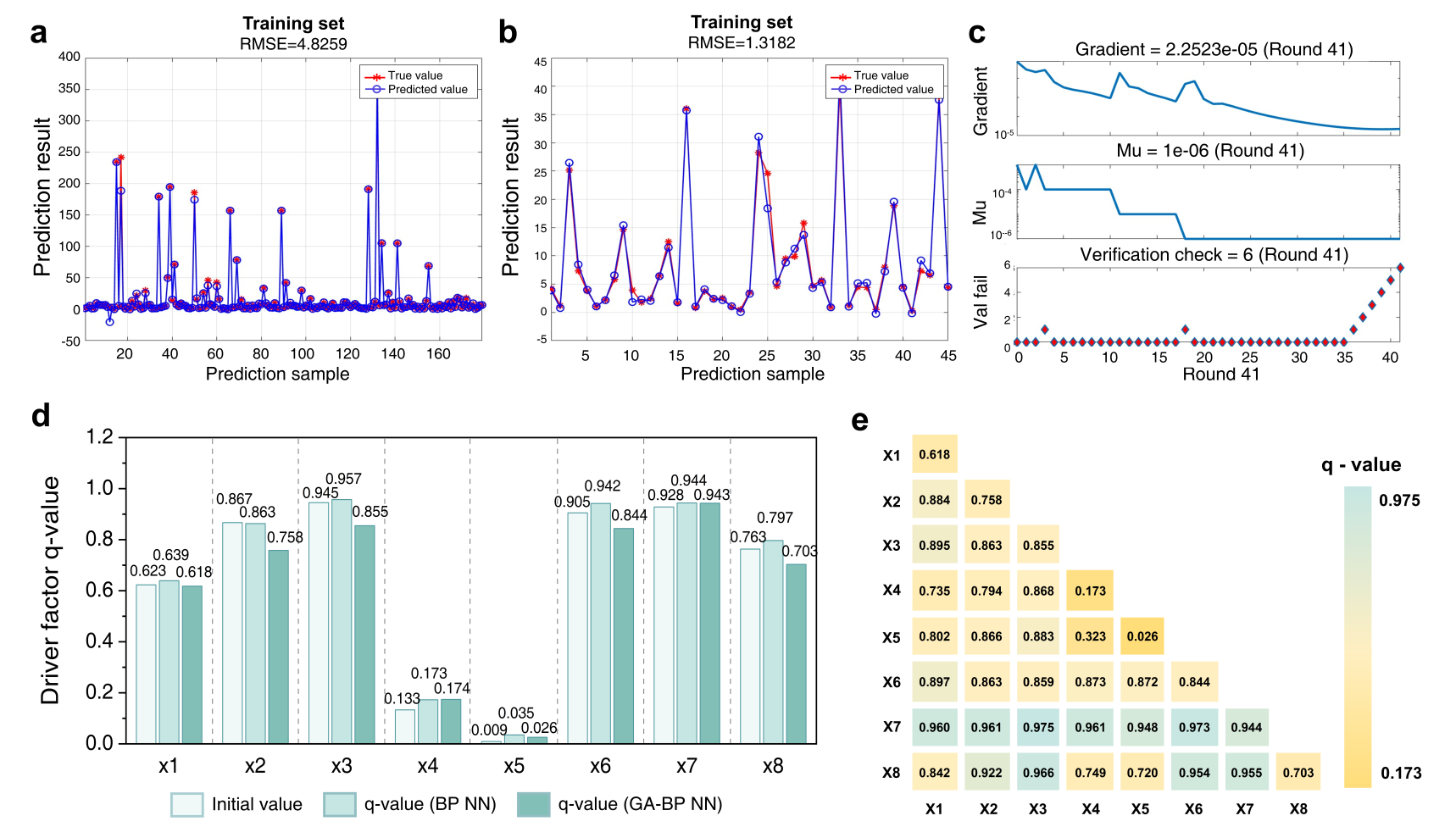
Figure 3. Exploration of major driving factors for carbon emission efficiency in municipal solid‑waste management systems.
Resource‑utilization technology (X7) serves as the primary driver for spatial differentiation in system‑green‑development performance, illustrating the technological dependency of waste‑resource‑recovery industries such as waste‑to‑energy incineration plants (Figure 3). The relatively low population share across western China affects household‑waste collection efficiency for upstream labour‑intensive enterprises in this industry; labour‑force scale (X3) also explains such spatial differentiation. When interacting with X3, the q‑statistics for technology‑investment level (X4) and waste‑treatment‑cost scale (X5) rise from 0.174 and 0.026 to 0.868 and 0.863 respectively. This indicates that appropriately expanding labour‑force scale to match technological upgrades and operation‑maintenance governance of local municipal solid‑waste‑management systems helps boost inter‑system synergies.
Carbon‑emission‑efficiency‑improvement strategies for municipal solid‑waste management systems under multi‑scenario simulations
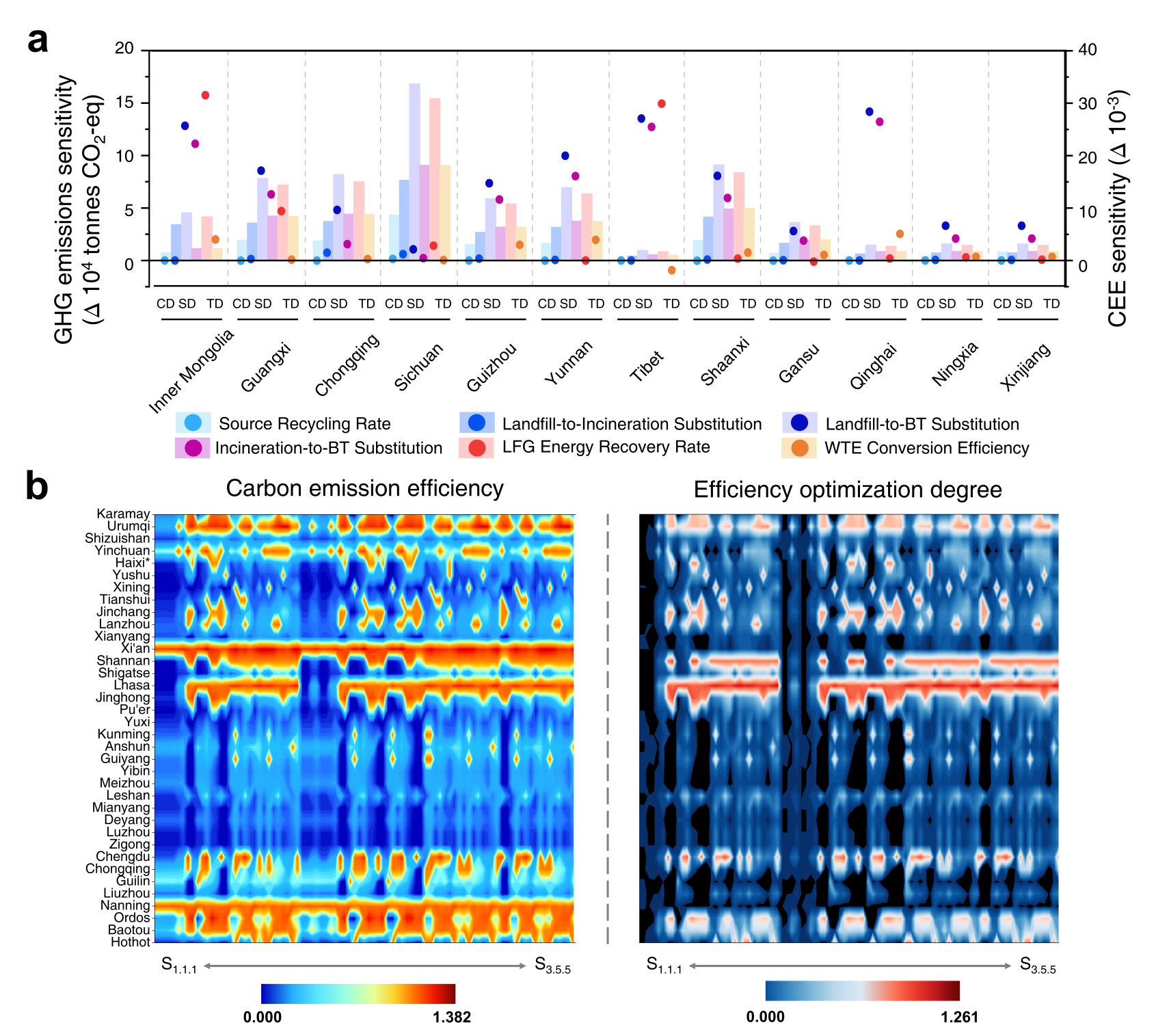
Figure 4. Carbon‑emission‑efficiency‑improvement potential and sensitivity analysis for municipal solid‑waste management systems in western China under multiple scenarios.
Within a two‑tier “gradient‑optimization” scenario framework, this study calculates system carbon‑emission efficiency across 90 scenarios corresponding to varying policy‑intervention intensities for three disposal links: source‑sorting‑and‑recycling, treatment‑structure optimization, and waste‑to‑energy conversion (Figure 4).
For single‑link optimization, end‑of‑pipe waste‑to‑resource recovery delivers the most notable efficiency‑improvement potential with an average efficiency value of 0.583, followed by treatment‑structure optimization (0.312) and source‑reduction (0.256). The combined effect of treatment‑structure optimization plus waste‑to‑energy conversion lifts carbon‑emission‑efficiency gains to 0.696 (roughly 2.5 times the baseline‑scenario value). The multi‑stage synergistic scenario integrating source reduction, structural adjustment and technological upgrading achieves the highest overall system‑level efficiency (average value 0.725). This suggests that although technology‑driven development patterns yield short‑term efficiency gains, long‑term evolution toward optimal system equilibrium requires breaking path dependency on isolated end‑of‑pipe facilities.
Conclusions
Waste‑to‑energy transitions for cities demand green policy frameworks formulated from a justice‑oriented perspective, preventing cities with poor resource endowments or excessive reliance on single‑technology pathways from slipping into economic‑affordability crises. Whole‑life‑cycle dynamic trade‑offs help enhance urban‑system resilience: while prioritizing source reduction as the top‑level objective, precise matching mechanisms between source‑sorting activities and end‑of‑pipe facility capacities should be established. Synergistic efficiency gains across the full industrial chain avoid overall‑system‑performance losses induced by partial local optimization.
Results demonstrate that leveraging zero‑waste‑city initiatives as leading drivers within region‑integrated collaborative‑waste‑governance networks will advance carbon‑neutrality targets for the waste sector. Differentiated management strategies should be formulated for western‑China municipal solid‑waste‑management systems according to efficiency‑response characteristics. Cooperative governance mechanisms featuring functional complementarity and synergistic efficiency shall be built among four city archetypes: “low‑efficiency‑high‑potential”, “energy‑substitution‑oriented”, “system‑synergy‑oriented”, and “input‑redundancy‑oriented” cities.
The region‑integrated collaborative‑governance framework established in this study effectively facilitates environmentally‑equitable and economically‑affordable transitions for municipal solid‑waste management. It aligns with globally‑advocated waste‑hierarchy‑based priority‑management frameworks. This work not only provides a scientific paradigm for comparable regions within China, but also delivers operable Chinese solutions for worldwide regions grappling with the trilemma of balancing environmental sanitation, energy‑security and climate objectives.
Paper details: Bao‑Jun Tang; Jingyi Zhao; Ru Li; Ke‑Jia Yang; Lu Chen; Fanjie Luo, Strategies for improving carbon emission efficiency of municipal solid waste management system in western China: A transition toward environmental equity. Environmental Science & Technology (2026). DOI: 10.1021/acs.est.5c14017.
Original‑article download link:
https://pubs.acs.org/10.1021/acs.est.5c14017
