


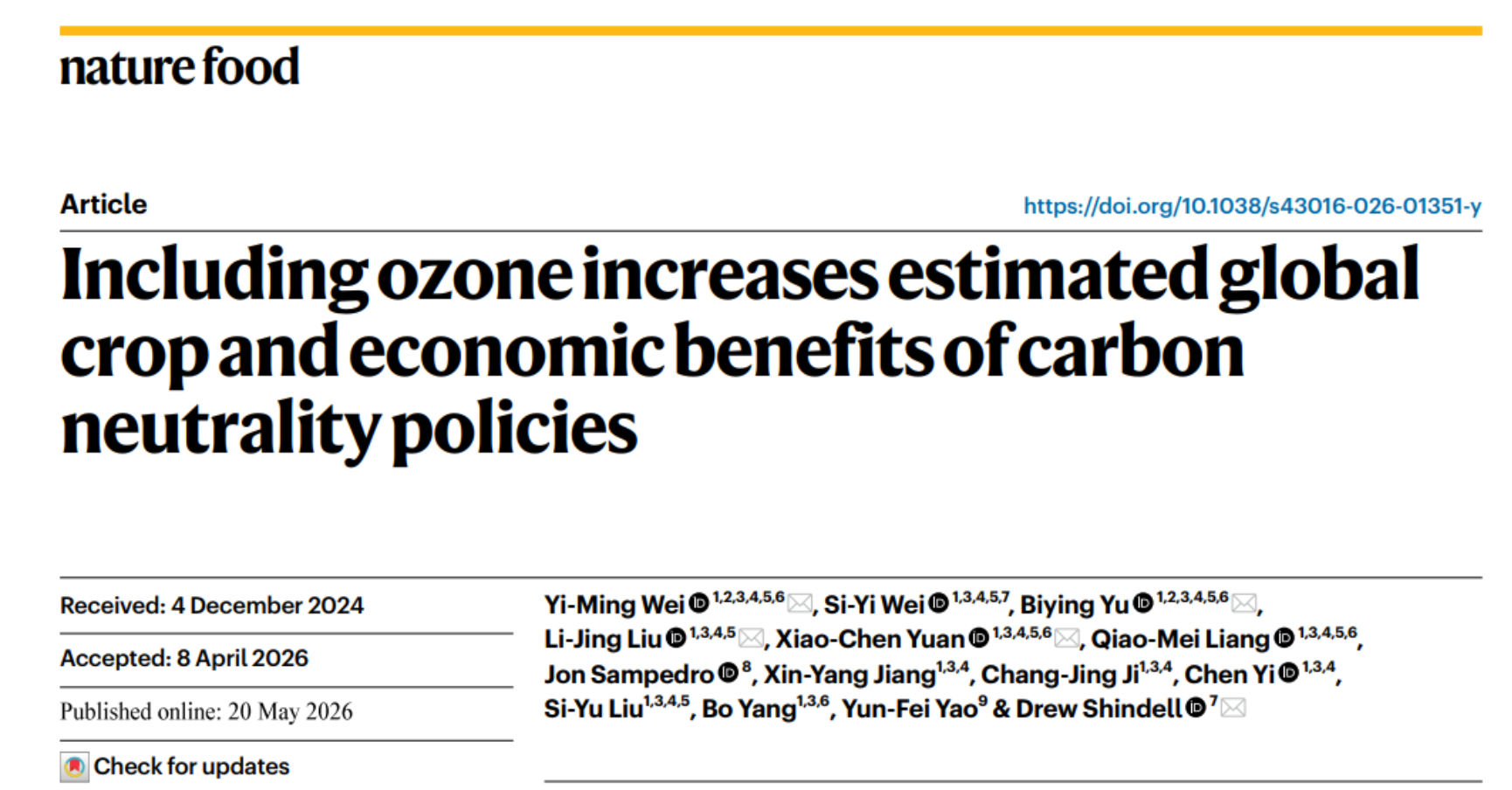
Recently, research conducted by Professor Wei Yiming’s team at the Beijing Laboratory for System Engineering of Carbon Neutrality, Beijing Institute of Technology, reveals that ignoring ozone effects will substantially underestimate global crop and economic benefits delivered by carbon‑neutrality policies. The finding offers new research perspectives and scientific evidence for identifying the comprehensive agricultural impacts of global carbon‑neutrality policies. The full‑length Research Article entitled Including ozone increases estimated global crop and economic benefits of carbon neutrality policies was published in Nature Food, a sister journal of Nature, on May 20, 2026 (Beijing time).
Crop growth is determined not only by climatic conditions but also by ozone stress. Greenhouse‑gas and pollutant emissions stemming from human economic activities trigger climate change and worsen ozone pollution. Together, these two factors generate considerable agricultural losses, further alter economic activities via market mechanisms, and thereby induce systemic consequences. Carbon‑neutrality policies can effectively curb emissions and bring potential agricultural and economic gains. Nevertheless, existing studies fail to integrate climate‑related factors and ozone within a unified analytical framework, and overlook cyclic feedback among economic, climate and agricultural systems. As a result, the comprehensive agricultural and economic impacts of carbon‑neutrality policies cannot be fully understood.
Against this backdrop, drawing on C3IAM 3.0, the climate‑change integrated assessment model independently developed by Professor Wei Yiming’s team, this study constructs dual impact pathways covering climate change and ozone pollution. It characterizes multi‑system feedback loops of “climate/ozone‑agriculture‑economy”, filling gaps in impact‑assessment modelling. The research systematically quantifies agricultural and economic losses that could be averted by global carbon‑neutrality policies, and puts forward differentiated adaptation and mitigation policy recommendations for countries at varying development levels. It provides quantitative evidence and scientific support for global climate governance and sustainable agricultural development amid carbon‑neutrality efforts.
Results indicate that implementing global carbon‑neutrality policies can raise the total output of four major staple crops — maize, rice, soybean and wheat — by 0.5 %‑41.5 %. Such agricultural productivity gains are equivalent to 0.03 %‑0.26 % of global gross domestic product. By 2060, over 70 % of grain‑growing regions can achieve crop yield increases under prevailing carbon‑neutrality policies. If ozone effects are omitted, yield impacts for the four staple crops in 2060 will be underestimated by 0.5 %‑27.8 %. Moreover, considering only climatic factors may underestimate the real effectiveness of carbon‑neutrality policies in preventing agricultural output losses by as much as 38.7 %.
Co‑corresponding authors of the paper include Professor Wei Yiming, Professor Yu Biying, Associate Professor Liu Lijing and Associate Professor Yuan Xiaochen from Beijing Institute of Technology, together with Professor Drew Shindell from Duke University, USA. PhD candidate Wei Siyi serves as student first author (second‑ranked author). This work received support from the Basic Science Center Program and Major Program of the National Natural Science Foundation of China, as well as the Beijing Laboratory for System Engineering of Carbon Neutrality.
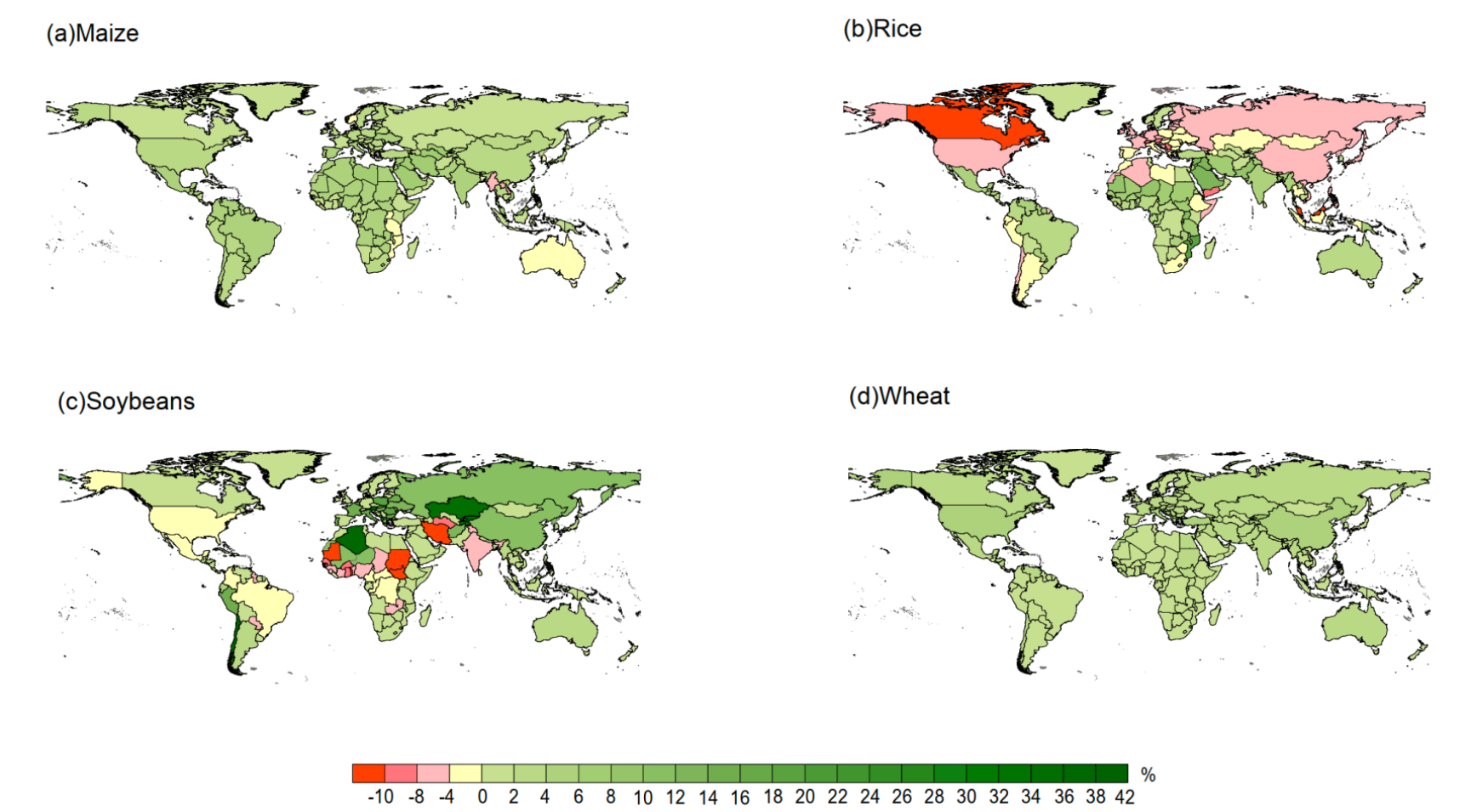
Figure 1 Percentage change in national crop yields in 2060
(a), (b), (c), (d) show yield changes for maize, rice, soybean and wheat respectively under the carbon‑neutrality policy scenario (Policy‑COA) relative to the business‑as‑usual baseline scenario (BAU‑COA).
C, O and A denote the inclusion of climate‑change effects, ozone effects and agricultural adaptation measures in scenario settings respectively.
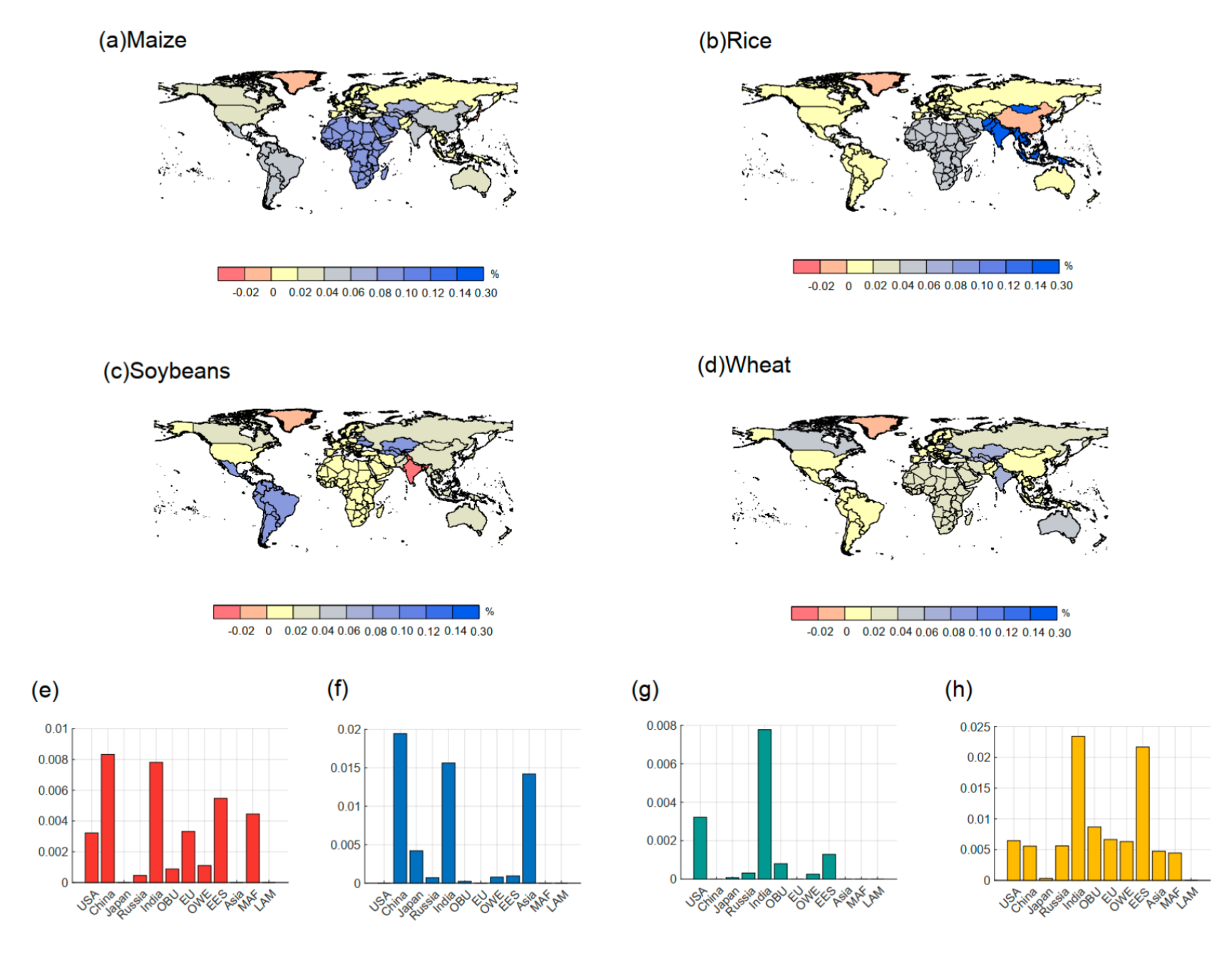
Figure 2 Percentage change in gross domestic product (GDP) in 2060
(a), (b), (c), (d) represent GDP changes induced by yield variations of maize, rice, soybean and wheat under Policy‑COA compared with BAU‑COA.
(e), (f), (g), (h) compare GDP outcomes under carbon‑neutrality policies with and without ozone impacts.
Paper details:
Yi-Ming Wei*, Si-Yi Wei, Biying Yu*, Li-Jing Liu*, Qiao-Mei Liang, Xiao-Chen Yuan*, Jon Sampedro, Xin-Yang Jiang, Chang-Jing Ji, Chen Yi, Si-Yu Liu, Bo Yang, Yun-Fei Yao, Drew Shindell*. Including ozone increases estimated global crop and economic benefits of carbon neutrality policies. Nature Food (2026). DOI:10.1038/s43016-026-01351-y
Original‑article download link:
https://www.nature.com/articles/s43016-026-01351-y
