


On November 13, 2025, the 18th Annual Meeting of the Integrated Assessment Modeling Consortium (IAMC) concluded successfully in Rio de Janeiro, Brazil. Five delegates from CEEP-BIT and the Beijing Lab for System Engineering of Carbon Neutrality attended the entire meeting, including postdoctoral researcher Wu Yun, and doctoral candidates Yang Bo, Zhao Yang, Wang Hao and Hu Yuxiang.
In the morning, 8 parallel sessions were held in total. Participating scholars continued to present cutting-edge research on themes including Impact, Economy, Methods and Feasibility, as well as sub-fields such as land use and the industrial sector. For example, the SSPs session highlighted major innovations in the CMIP7 scenario framework, and elaborated on core setting differences of new emission pathways in terms of fundamental transformation of energy structure, deployment scale of carbon dioxide removal (CDR) technologies, and demand-side behavioral transition, providing a key scenario basis for next-generation climate assessments. The two Industry sessions focused on the integration of dynamic material flow analysis into the IAM framework. Leading modeling teams including MESSAGE, GCAM, REMIND, WHICH and IMAGE all presented research outcomes on dynamic material flow coupling in the transportation, power, chemical and steel sectors. Through dynamic feedback between technology adoption and material demand, they quantified the synergistic effects of industrial emission reduction technologies and circular economy strategies.
During the meeting, the BIT team conducted in-depth exchanges with a number of internationally renowned scholars. They consulted Professor Detlef P. van Vuuren from the Netherlands Environmental Assessment Agency on the quantitative approach of integrating planetary boundaries with IAM in his latest paper; discussed the equity of CDR technology deployment with Professor John Weyant from Stanford University; exchanged views with Professor Keywan Riahi from IIASA on the modeling methodology of decent living standards in the MESSAGE model; and talked with Dr. Maskym Chepeliev from the same institution about the direction of international trade modeling in agri-food systems. Meanwhile, team members also introduced the research progress of the center and held preliminary discussions on future exchanges and cooperation.
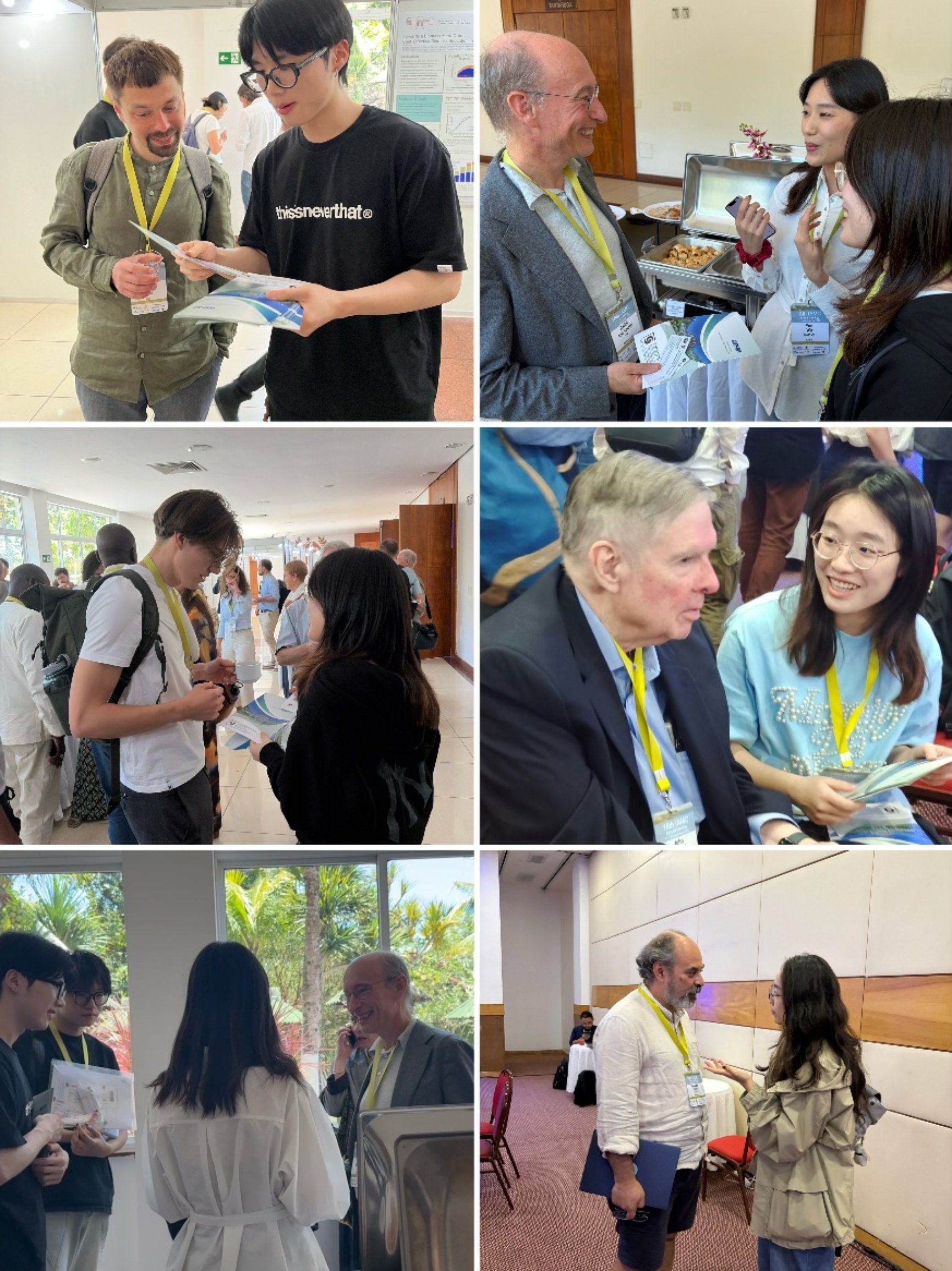
## Figure 1 On-site Exchange
In the afternoon, two plenary presentations further focused on key issues. David Victor from the University of California, San Diego, and Lara Aleluia Reis from CMCC in Italy explored climate governance pathways under the new geopolitical reality. Afterwards, April Williamson from the University of Oxford in the UK and Saritha Sudharmma Vishwanathan from IIMA in India presented the latest achievements in integrating equity and justice concepts into climate models. Finally, moderated by Roberto Schaeffer from COPPE/UFRJ in Brazil, each scientific working group reported research progress over the past year in areas including data protocols, scenario diagnostics, climate finance and national scenarios.
The award ceremony of the meeting was presided over by Professor Elmar Kriegler. Professor Saritha Sudharmma Vishwanathan received the Outstanding Contribution Award in Integrated Assessment Modeling for her contributions in linking national transformation with global modeling, leading international model intercomparison, and advancing climate justice research. The Best Poster Award was presented to the study Resource Stress Under Irrigation Expansion And Climate Change In Ethiopia, which systematically assessed the multiple impacts of irrigation expansion against the backdrop of climate change through an enhanced climate-land-energy-water coupling model. The Early Career Researcher Award went to Adrian Odenweller, in recognition of his pioneering work in model coupling and green hydrogen research. The Lifetime Achievement Award was conferred upon Professor Roberto Schaeffer, honoring his remarkable contributions including 25 years as a lead author for the IPCC, founding the Cenergia Research Center, coordinating and supporting the drafting of Brazil’s climate assessment report for COP30, and training more than 160 talents in the climate field.
This annual meeting has further promoted the in-depth integration of scientific exploration and policy support in the field of integrated assessment modeling, and laid a solid foundation for the BIT team to expand international cooperation and deepen research.
