


Delegates from the Center for Energy and Environmental Policy Research / Beijing Lab for System Engineering of Carbon Neutrality at Beijing Institute of Technology continued to participate in and follow the final sessions of COP30 from November 20 to 22, 2025. This conference in Belém was a climate conference with no collapse yet no major surprises. It delivered “three‑and‑a‑half” major outcomes, left “five gaps” unresolved, and may bring about a “three‑tier system” and “four plausible scenarios” in the future.
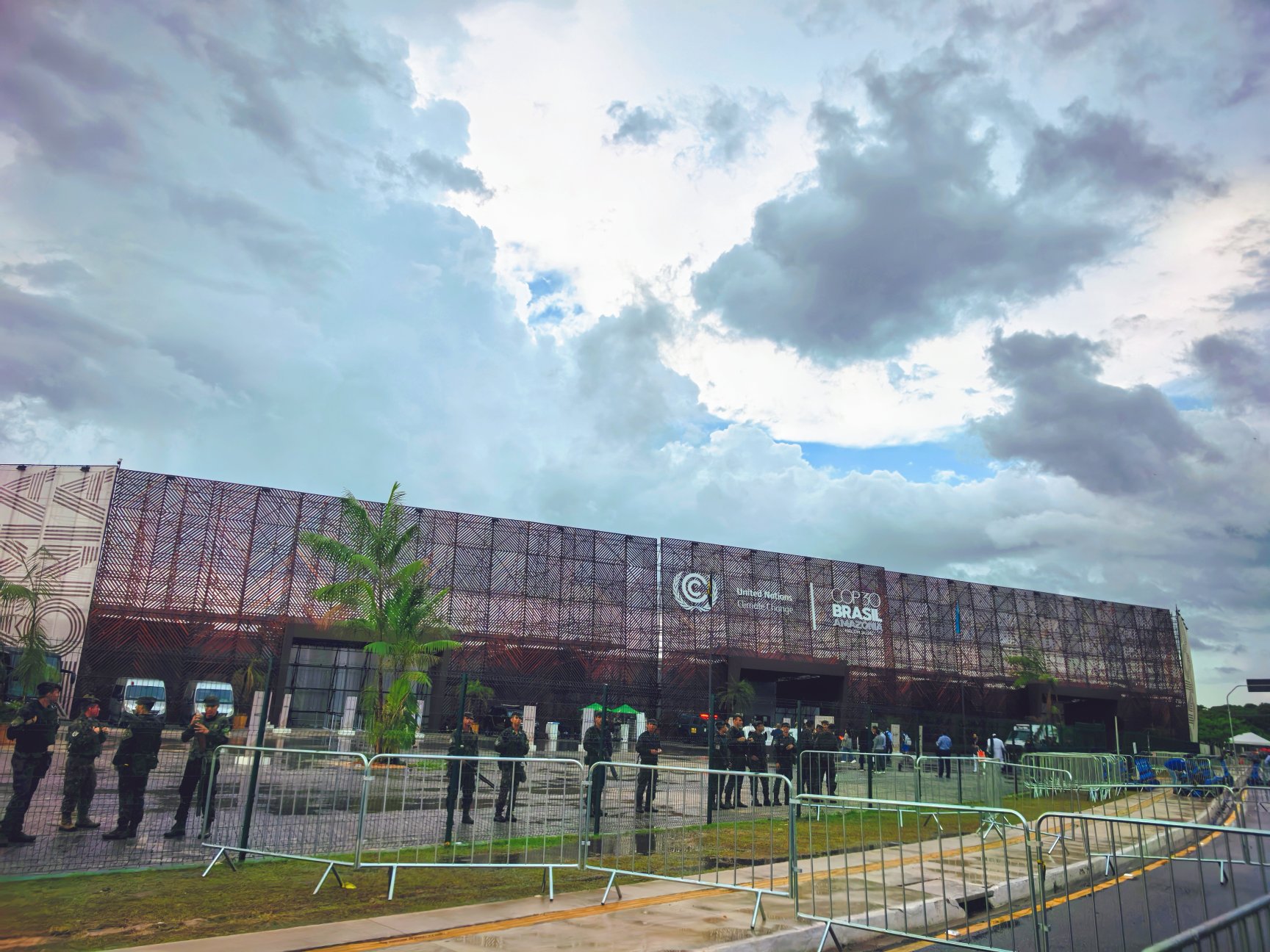
The 30th Conference of the Parties to the United Nations Framework Convention on Climate Change has concluded, with parties reaching consensus on multiple topics.
“Three‑and‑a‑half” major outcomes — The conference achieved an institutional half‑breakthrough. The Belém Just Transition Mechanism was formally incorporated into the UNFCCC, turning just‑transition rhetoric into a United Nations procedure for the first time. Nevertheless, supporting finance has not yet been secured, hence counting as half an outcome. The conference delivered a “paper doubling” of finance targets: developed countries agreed to triple adaptation finance, yet the timeline was postponed from 2030 to 2035, which small‑island states criticized as tightening the lifeline for another five years. Multilateral mechanisms were kept alive: 194 countries reached a minimum consensus, avoiding a Copenhagen‑style breakdown and preserving the procedural legitimacy of the UNFCCC. An off‑venue breakthrough was made on forest issues: 90 countries signed the Global Zero‑Loss Forest Roadmap outside official negotiations, and Brazil launched the USD 1‑billion Tropical Forests Forever Facility. Neither document, however, was integrated into the official negotiating text.
“Five gaps”
‑ Gap 1: Ambition gap. Science calls for a 43 % global emission cut by 2035, while aggregate national NDCs amount to merely 23 %, representing a two‑fold shortfall.
‑ Gap 2: Finance gap. Developing‑country needs exceed USD 2.4 trillion per year, yet current flows fall below USD 400 billion per year — a six‑fold gap.
‑ Gap 3: Trust gap. Financing pledges have been broken for three consecutive years; actual disbursements to the Loss and Damage Fund stand at less than 10 % of pledged amounts. The G77 issued a collective statement that the negotiation mechanism has lost credibility.
‑ Gap 4: Nature‑climate disconnect. Official texts contain almost no substance on forests, oceans and agriculture, and the term “fossil fuels” was struck out via a single‑party veto.
‑ Gap 5: Institutional fatigue. Consensus‑based rules have suffered repeated strategic vetoes, with successive countries exercising single‑party blocking power over global outcomes. The UNFCCC is drifting toward becoming a lowest‑common‑denominator mechanism.
Future “three‑tier system” — Global governance from 2025 to 2035 will enter an era of three‑tier parallelism. The UNFCCC will persist yet may be downgraded to a platform for minimum‑level consensus. Voluntary coalitions, namely minilateral groupings such as the Fossil‑Fuel‑Free Alliance, High‑Ambition Coalition and International Just Transition Alliance, may become de facto rule‑setters. Market‑ and supply‑chain‑based systems including the CBAM and Digital Product Passport (DPP) embed climate rules into trade, finance and industrial chains, and may gradually gain greater influence than United Nations‑led processes.
Plausible “four scenarios”
1. Optimistic green globalization: Green standards are mutually recognized between China and Europe. More than 60 % of China’s exports are green products, and China becomes the world’s largest green‑finance market.
2. Dual‑system world with moderate frictions: The EU‑US bloc and China‑Global‑South blocs each form their own sets of green standards, with China leading a green‑focused Global‑South circle.
3. High‑fragmentation resilience‑oriented islands: Geopolitical conflicts compound extreme disasters. Nations shift toward security priorities. China strengthens domestic circulation and advances the Belt and Road Initiative to sustain growth.
4. Crisis‑driven leap‑forward transformation: Compound crises spanning water, food, heat and conflicts occur repeatedly between 2030 and 2035, forcing global progress in ecological conservation. China provides global solutions in water security, nature‑based infrastructure and AI‑powered monitoring.
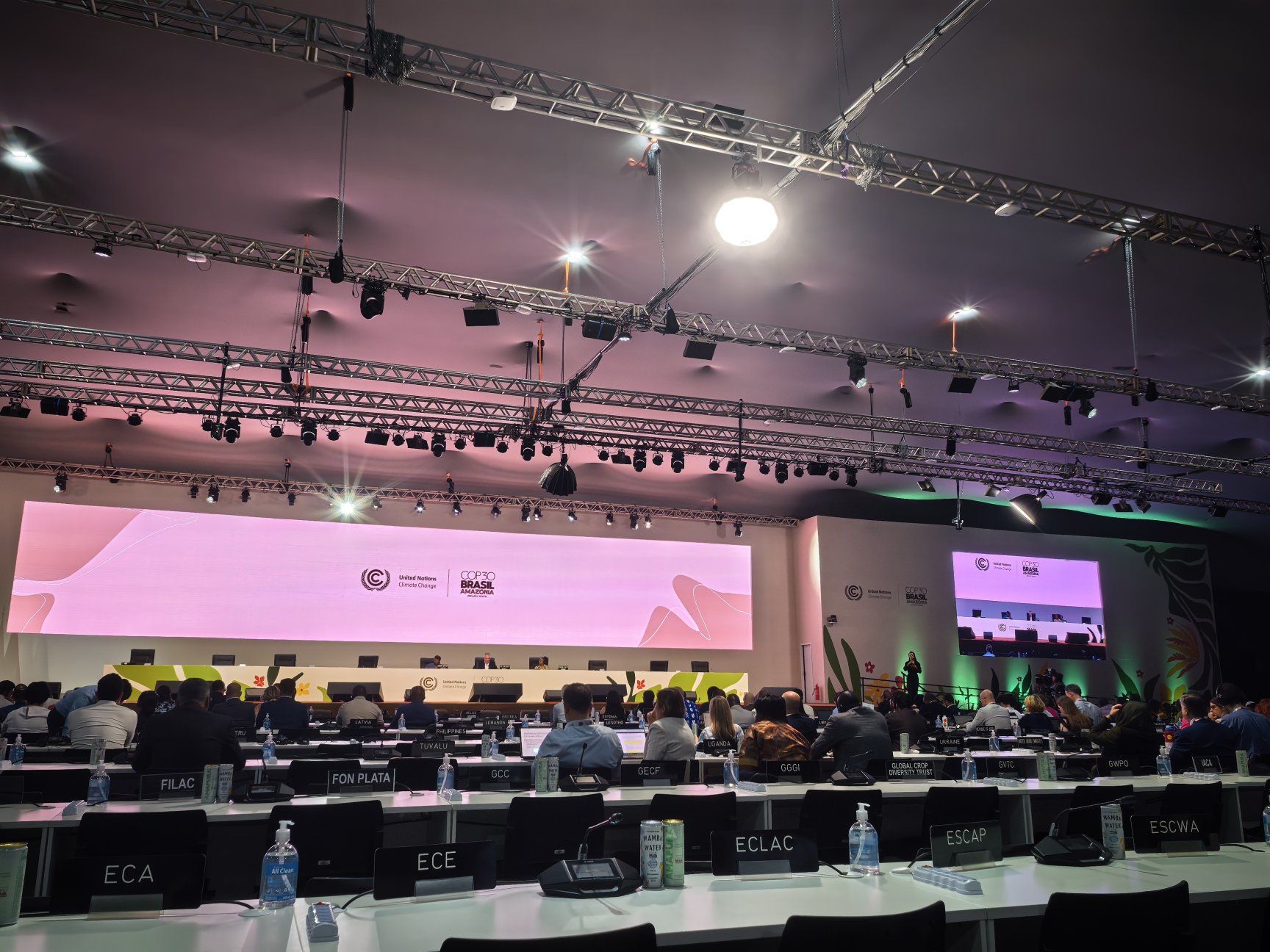
Venue of the 30th Conference of the Parties to the United Nations Framework Convention on Climate Change
Looking ahead, COP30 has laid bare rifts within multilateralism, evasive postures from developed countries, inconsistent positions among fossil‑fuel‑reliant states, the geopoliticization of nature‑related topics and the hollowing‑out of finance architectures. It also signals that low‑ambition politics paired with intensive industrial restructuring will likely define the coming decade. The main battlefield for climate action is shifting away from negotiation tables and toward trade rules, supply chains, technical standards and financial markets.
