


In June 2026, several doctoral students from the center took part in internal seminars and lectures hosted by their overseas host institutions, engaging in exchanges and learning on cutting‑edge topics including climate change and the development of resilient energy systems.

Doctoral students Yang Bo and Chen Shiwei attended the two‑day Interaction Festival held by the International Institute for Applied Systems Analysis (IIASA). On the first day, IIASA’s current Director and leaders of various project groups systematically presented the institute’s future scientific vision. All staff members of IIASA held multiple in‑depth breakout internal discussions covering climate‑energy transition, systems analysis and intelligent decision‑making, demography and just transition. Round‑table forums were arranged on the second day, where representatives from IIASA member states, Scientific Committee members and top researchers across disciplines held strategic dialogues on hot‑button issues such as the practical implementation of the scientific vision as well as AI and digital development. Through this event, Yang Bo and Chen Shiwei connected with more scholars sharing common research interests and pursued further in‑depth discussions on research interests over luncheons and coffee breaks afterwards.
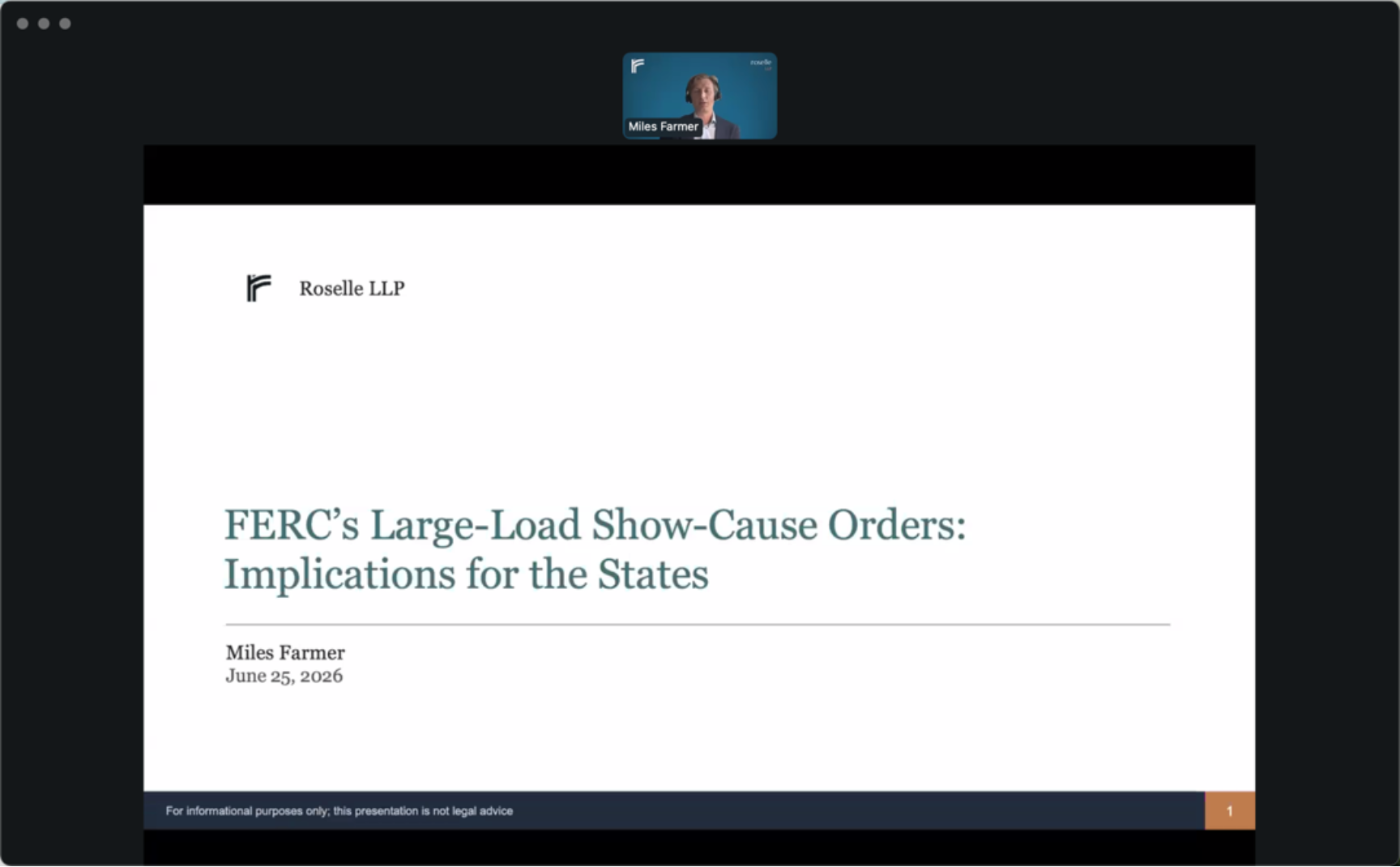
On June 25, 2026, Wang Xiaokun joined an online seminar themed FERC’s Large Load Interconnection Orders. Centered on energy governance and power‑system development amid the rapid growth of large‑scale electricity loads, the event covered multiple subjects including power grid planning, energy policy, regulatory frameworks, electricity‑market operation and challenges arising during energy transition. Experts from energy‑policy, legal and industrial institutions were invited to give thematic presentations and engage in discussions. At the seminar, Wang Xiaokun learned about the latest research and practical advances in energy policy, energy‑system governance and electricity‑market regulation. Multiple experts debated large‑load grid interconnection, power‑grid infrastructure construction, cost‑allocation mechanisms and energy‑system resilience, and analyzed the potential impacts of relevant policy adjustments on energy transition and electricity‑market evolution. Moreover, he gained greater insight into frontier challenges within current energy governance and deepened his understanding of energy‑policy design, electricity‑market operational mechanisms, energy‑infrastructure planning and multi‑level governance coordination. This proved instructive for understanding policy‑making and governance practices in the context of energy transition.
On June 23, Chen Zheyi attended the plenary session of the Global Energy Transition and Electrification Summit, held as part of London Climate Action Week 2026. Bringing together government delegates, representatives of international organizations and stakeholders from all sectors of society, the event facilitated dialogue on global energy transition and electrification. Discussions focused on accelerating the build‑out of clean power systems, advancing socioeconomic electrification and gradually phasing down fossil‑fuel dependence amid geopolitical uncertainties and volatile energy prices. These exchanges gave Chen Zheyi first‑hand insight that energy transition is far more than technological substitution; it also involves multiple dimensions such as energy security, international cooperation, investment support and just transition, and fostered a more concrete understanding of international coordination for global energy transition.
